Resources
Fundamentals and selection guides
The measurement principle, how to write a specification, and how to judge whether the instrument pays for itself.
7 resources
Showing all 7
Fundamentals
How TDLAS works: measurement principle and engineering fundamentals
Scanning a narrowband laser across a molecular absorption line and quantifying the attenuation. The principle, the signal processing and the engineering that decides performance.
Guide
How to specify a gas analyzer: a selection framework
Start from the measurement requirement, not the technology: target gas, concentration range, response time, process matrix and installation geometry.
Guide
TDLAS gas analyzers as process control instruments
Stable, repeatable data at the rate the control loop needs, a direct interface to the automation system, and calibration held over months.
Guide
What real-time gas analysis means in practice, and where it matters
A full spectroscopic measurement in as little as 100 µs, up to 10 kHz. Where that speed changes the outcome, and where it does not.
Commercial
Total cost of ownership for TDLAS gas analyzers
Calibration gas, sensor replacements, maintenance labour and unplanned downtime dominate lifecycle cost, not the purchase price.
Commercial
When TDLAS justifies its cost, and when it does not
How much the measurement matters, what the alternative costs to maintain, and whether the environment would degrade a conventional sensor first.
Engineering
Beamonics product design philosophy explained
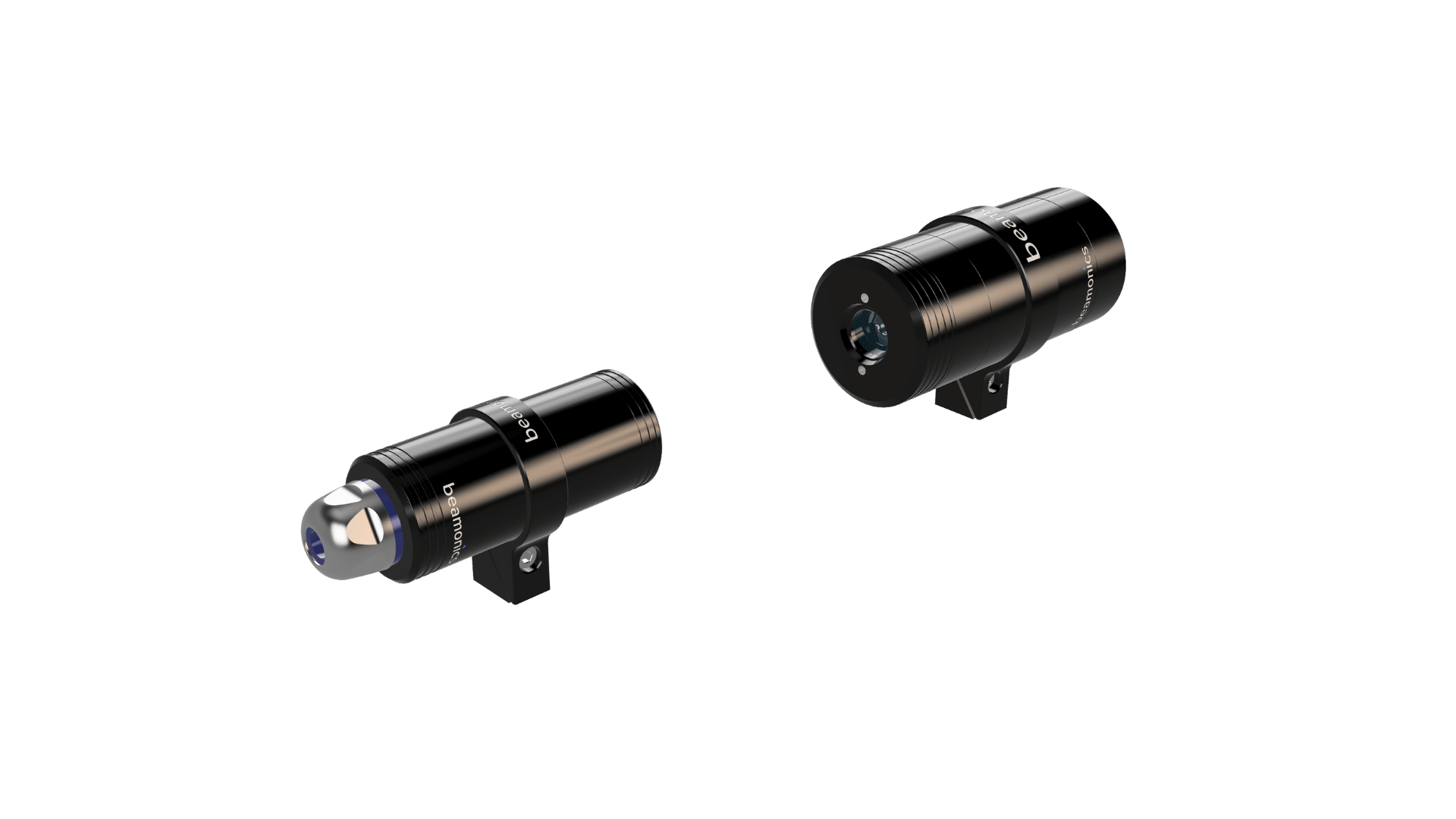
Three distinct optical configurations built on one shared spectroscopy platform, manufactured in Lund.
Nothing in fundamentals and selection guides matches that search. Search all resources
Not sure which configuration your measurement needs?
Send us the gas, the concentration range and the process conditions. An application engineer will tell you whether cross-stack, extractive or standoff is the right fit, and whether TDLAS is the wrong tool for the job.