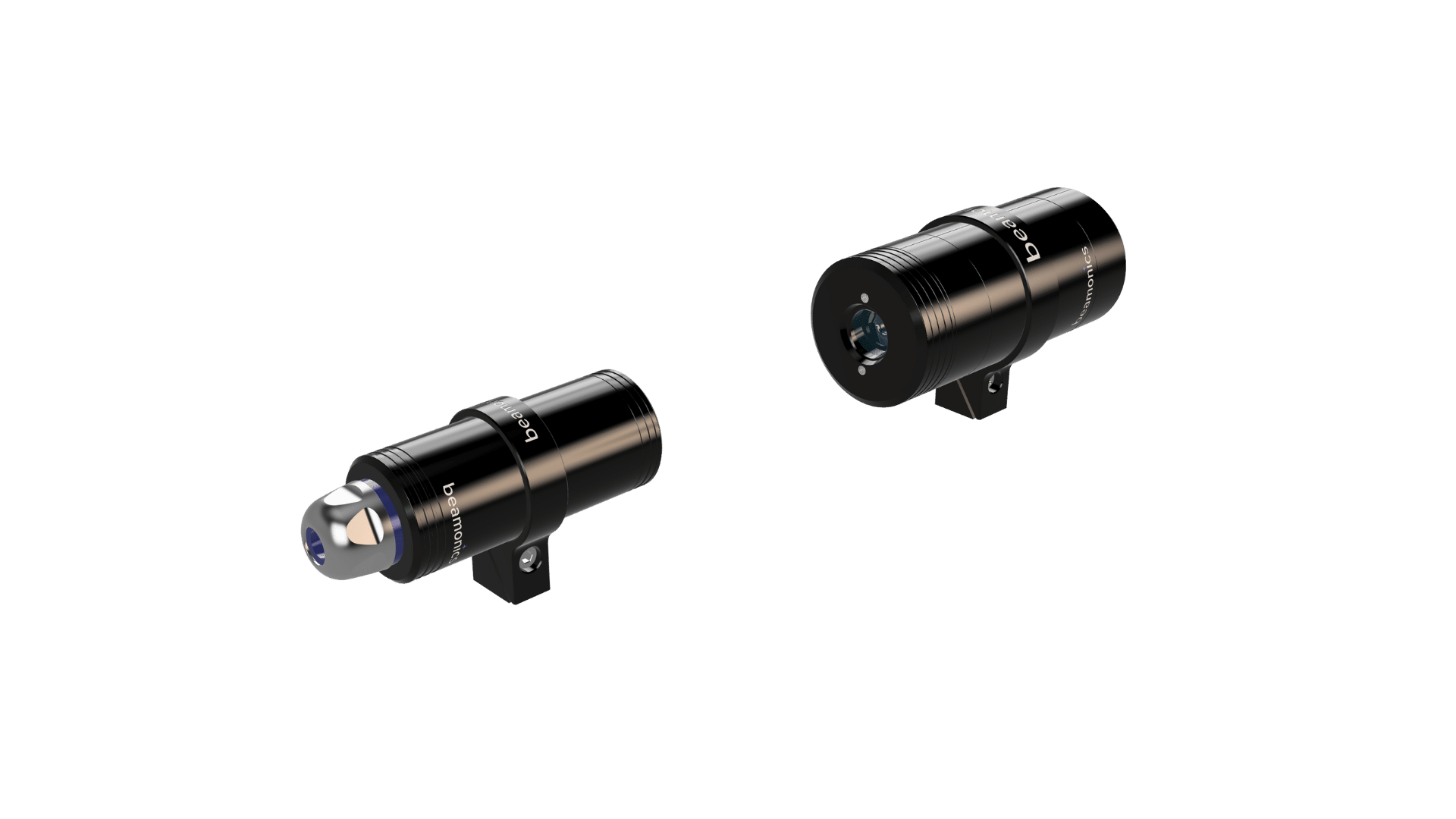
Industrial process control
Real-time gas analysis with TDLAS-based systems for stable, efficient, and predictable industrial processes.
Overview
Industrial processes rely on precise control of gas composition to maintain efficiency, protect equipment, and ensure consistent product quality. From reactors and furnaces to scrubbing systems and chemical treatment lines, continuous gas monitoring is essential to keep operations stable and prevent costly process deviations.
Beamonics’ TDLAS analyzers provide real-time, drift-free measurement of critical gases, including NH₃, CO, CO₂, H₂O, HF, HCl, and O₂, enabling tight control loops and improved operational reliability.

What industrial process control solves
- Process Instability: Unexpected gas fluctuations cause temperature swings, reaction irregularities, and lower product quality.
- Chemical Overuse & Inefficiency: Without accurate data, operators overdose reagents (e.g., NH₃, lime, acids), increasing costs and downstream emissions.
- Corrosion & Fouling: Moisture, acid gases, and unreacted species form corrosive compounds that damage equipment and shorten maintenance cycles.
- Safety Risks: Toxic or flammable gases require continuous surveillance to avoid hazardous conditions.
- Unplanned Downtime: Process disruptions caused by undetected gas deviations lead to stoppages and lower throughput.
Real-time gas monitoring prevents these issues before they escalate.
How Beamonics Improves Process Control
Beamonics analyzers deliver:
-
Millisecond response
-
Sub-ppm accuracy for moisture, NH₃, HF, HCl
-
Broad measurement range (ppm → percent)
-
Immunity to drift and cross-sensitivity
-
Stable operation in hot, humid, dusty, or corrosive environments
This enables true closed-loop control for complex industrial systems.
Our products
Why our products are different
Adaptive Signal Control
Real-time compensation for fluctuating transmission.
Unmatched Precision
Flexible Integration
Adaptable outputs in your preferred format, fitting into existing PC/PLC.
True Real-Time Insights
>1000 analyses per second, notifying you when conditions change.
Ultra-Low Detection Limits
Compact Form Factor
Small, lightweight design makes installation and retrofitting simple.
Instant Startup
No warm-up or stabilizing time. Start measuring within seconds.
Reliable in Harsh Conditions
Accurate measurement even at low transmission levels, down to ~1%.
Made in Sweden
Built with robust, replaceable components for long service life.
How our technology works
1. Laser Emission
A tunable diode laser emits specific colors (wavelengths) of light that is directed through the gas sample.
2. Absorption Measurement
As the laser passes through the gas, molecules absorb some light, which is then measured and recorded.
3. Concentration Calculation
The absorption is analyzed to determine the gas concentration, providing precise, real-time measurements.
Frequently asked questions
What problems do your gas analyzers solve?
We help process and environmental teams measure critical gases in real time (e.g., CH₄, CO₂, H₂S, HF, HCl, H₂O, O₂) for safety, quality, and compliance across biogas, CCUS, battery, chemicals, and more.
How is TDLAS different from NDIR or electrochemical sensors?
TDLAS measures the unique absorption line of a gas with a laser. It’s fast, selective, stable, and needs less frequent calibration than NDIR/electrochemical cells in most tough processes.
Do you offer both in-situ and extractive measurement?
Yes. We provide line-of-sight in-situ probes for hot/wet ducts and extractive analyzers for conditioned sample lines. We help you choose based on dust load, pressure, temperature, and access.
What gases do you measure today?
Common: CH₄, CO₂, H₂S, NH₃, HF, HCl, H₂O, O₂, CO, and others on request. Please ask if your target gas isn’t listed.
How fast is the response time?
In practice, there is no T90, as our TDLAS analyzers operate in real time. For example, we deploy solutions in high-speed processes with several 100 Hz/ms. However, typical end-user requirements are often 1–2 seconds in situ and 2–5 seconds for extractive applications (application-dependent).
What accuracy and detection limits can we expect?
Process-ready accuracy (often ±1–2% of reading) and low ppm detection for many species. We’ll quote measurement range, repeatability, and LOD per application.
What does maintenance look like?
Maintenance is typically minimal. Mainly optics checks and purge air filter changes. No consumable cells. Annual verification is standard. No calibration is needed, since TDLAS is self-referencing.
Can you integrate with our DCS/PLC/PC?
Yes, please review the specific datasheet for the product you are interested in. Standard configurations are RS-485, RS-422, USB, 4-20 mA, and so on. Our solution comes complete with a servicing and commissioning software and integration-ready API. We are happy to help if you are unsure which integration method is best for you.
What certifications and ATEX/IECEx options are available?
We offer some enclosures and probes for industrial and explosive areas. Please reach out to us if you have questions regarding ATEX/IECEx, and we will do our best to assist you. We are committed to quality and are certified to ISO 9001:2015.
What are typical lead times and pricing models?
Most systems ship in 4–6 weeks, while some custom builds can take up to 12 weeks. Pricing depends on gas set, configuration, and explosive-area needs. We also offer pilot programs.
TALK TO OUR TDLAS EXPERTS
Interested in learning more?
Talk to an engineer or contact us to learn more about our products and technology, and explore how our next-generation TDLAS gas analyzers can solve your gas analysis applications.