In Brief
A gas analyzer used for process control must meet requirements that go beyond analytical accuracy: it must deliver stable, repeatable data at a rate compatible with the control loop, interface directly with the automation system, and maintain its calibration over months or years without operator intervention. Beamonics TDLAS meets these requirements because its measurement is referenced to molecular physics rather than to a degrading sensor element, and because its real-time response supports closed-loop control of dynamic processes.
Background
Gas analysis in industrial process control is not the same problem as gas analysis in a laboratory. A laboratory analyzer optimises for accuracy, resolution, and the ability to identify unknown species in a complex mixture. A process analyzer optimises for a different set of priorities: repeatability over time, speed of response relative to the process dynamics, integration with the automation layer, and the ability to operate unattended for months between maintenance interventions.
These priorities are not in conflict with accuracy, but they add constraints that laboratory instruments do not face. A gas chromatograph may deliver definitive compositional analysis, but its batch cycle time of minutes makes it unsuitable for closed-loop control of a process that changes in seconds. An FTIR spectrometer may quantify 20 species simultaneously, but its mechanical complexity and sample conditioning requirements make it difficult to maintain in a remote field installation. An electrochemical sensor may be inexpensive and compact, but its drift between calibrations introduces a systematic error that accumulates in the control loop.
The value of Beamonics TDLAS in process control is that it resolves the tension between analytical performance and operational robustness. The measurement is fast enough for real-time control, stable enough to hold calibration indefinitely, and simple enough mechanically to operate with minimal maintenance in harsh industrial environments.
What a control loop requires from a gas analyzer
A process control loop consists of a sensor (the gas analyzer), a controller (typically a PLC or DCS function block), and an actuator (a valve, damper, blower, or dosing pump). The controller compares the measured gas concentration against a setpoint and adjusts the actuator to minimise the error.
For this loop to function well, the analyzer must satisfy several conditions.
The measurement must update faster than the process changes. If the analyzer response is slower than the process dynamics, the controller operates on stale data and either oscillates or cannot track disturbances. The relevant comparison is between the analyzer’s response time (including any sample transport delay) and the process time constant.
The measurement must be repeatable over the control interval. Absolute accuracy matters, but repeatability matters more for control. A sensor that reads 2% high but does so consistently can be compensated with an offset. A sensor that drifts unpredictably between calibrations introduces a variable error that the controller cannot distinguish from a real process change.
The measurement must interface electrically with the control system. In practice, this means 4-20 mA analog output for direct connection to PLC analog input modules, or a digital serial protocol (Modbus RTU over RS-485 is the most common in process industries) for richer data including diagnostics and status flags. Relay outputs for alarm functions are often needed as well.
The measurement must survive the process environment. Temperature, humidity, vibration, dust, and corrosive gases are the norm in industrial settings. An analyzer that requires a climate-controlled enclosure or frequent optical cleaning imposes an infrastructure and maintenance burden that undermines its value as a process instrument.
How Beamonics TDLAS addresses these requirements
Speed
The Beamonics TDLAS platform completes a spectroscopic analysis cycle in as little as 100 microseconds, with configurable output rates from 1 Hz to 10 kHz. For most process control applications, output rates of 1 to 10 Hz are sufficient and provide a good balance between response speed and measurement noise. This is one to two orders of magnitude faster than electrochemical sensors (T90 of 30 to 120 seconds) and substantially faster than extractive paramagnetic or NDIR analyzers once sample transport delay is included.
In a cross-stack BeamStack installation, the measurement is truly in-situ: there is no sample line, no transport delay, and no conditioning system between the process gas and the analyzer. Beamonics TDLAS is a real-time technique with practically no response delay. The measurement is optical and instantaneous, with no diffusion or reaction time involved.
In an extractive BeamCell installation, the spectroscopy response remains instantaneous, but the total system response includes the time for the sample to travel from the process tap to the measurement cell. This transport delay depends on tubing length, diameter, and flow rate. For a 5-metre sample line at a moderate flow rate, the transport delay is typically a few seconds, which is still adequate for most process control loops but must be accounted for in the controller tuning.
Stability
Because the Beamonics TDLAS measurement references a molecular absorption line, a physical constant, the calibration does not drift with time, temperature, or exposure history. This is the single most important property for process control use. A measurement that holds its calibration for years without intervention means the controller always works from accurate data, and the operations team does not need to schedule calibration outages or wonder whether a gradual process trend is real or an artifact of sensor drift.
Factory calibration against known gas-line parameters and reference standards sets the instrument during production. Verification with a reference gas can be performed at any time but is not required on a schedule. The built-in self-diagnostics continuously monitor laser power, detector signal, and spectral fit quality, and flag degraded conditions as instrument faults rather than as false concentration readings.
Integration
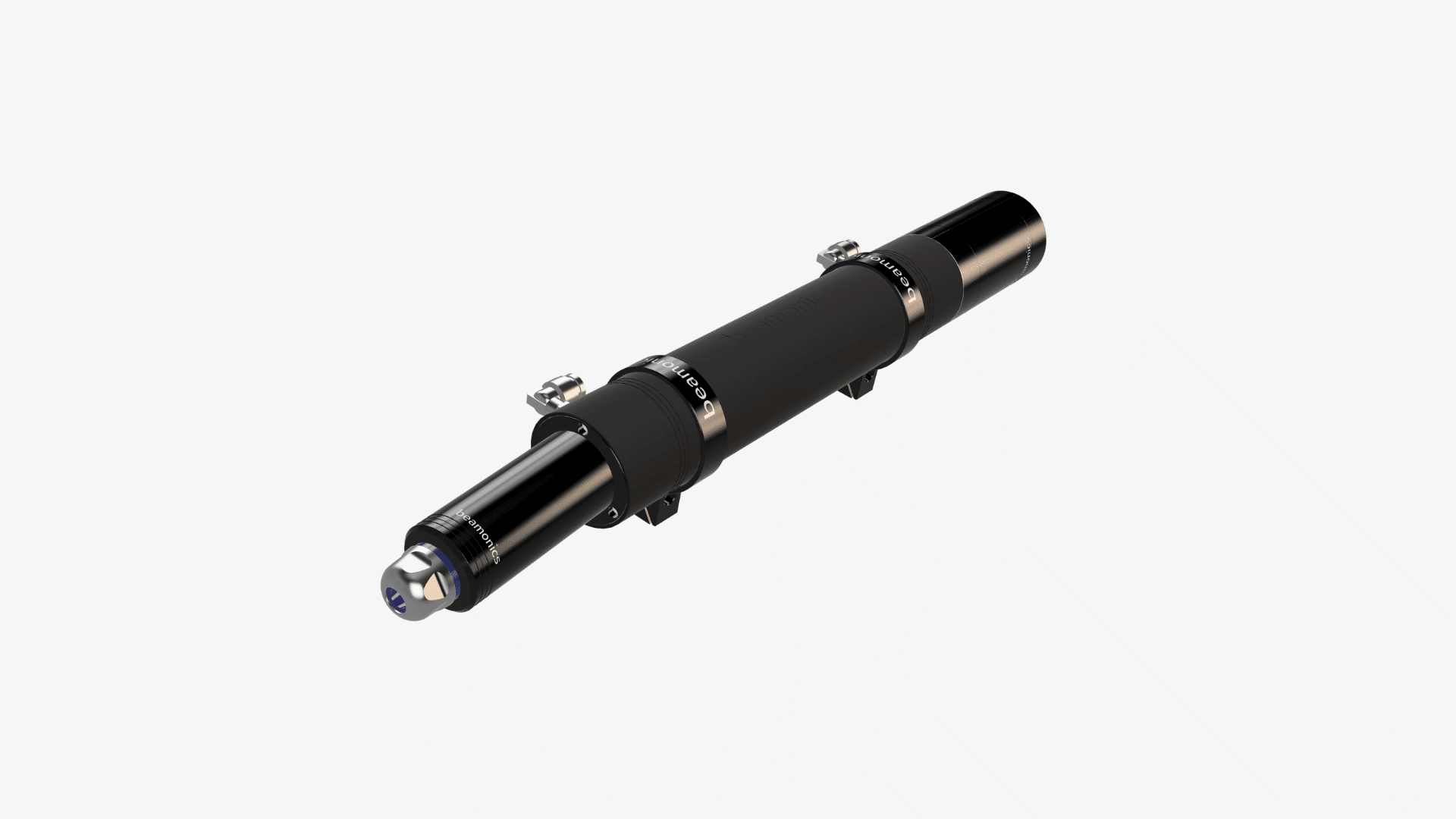
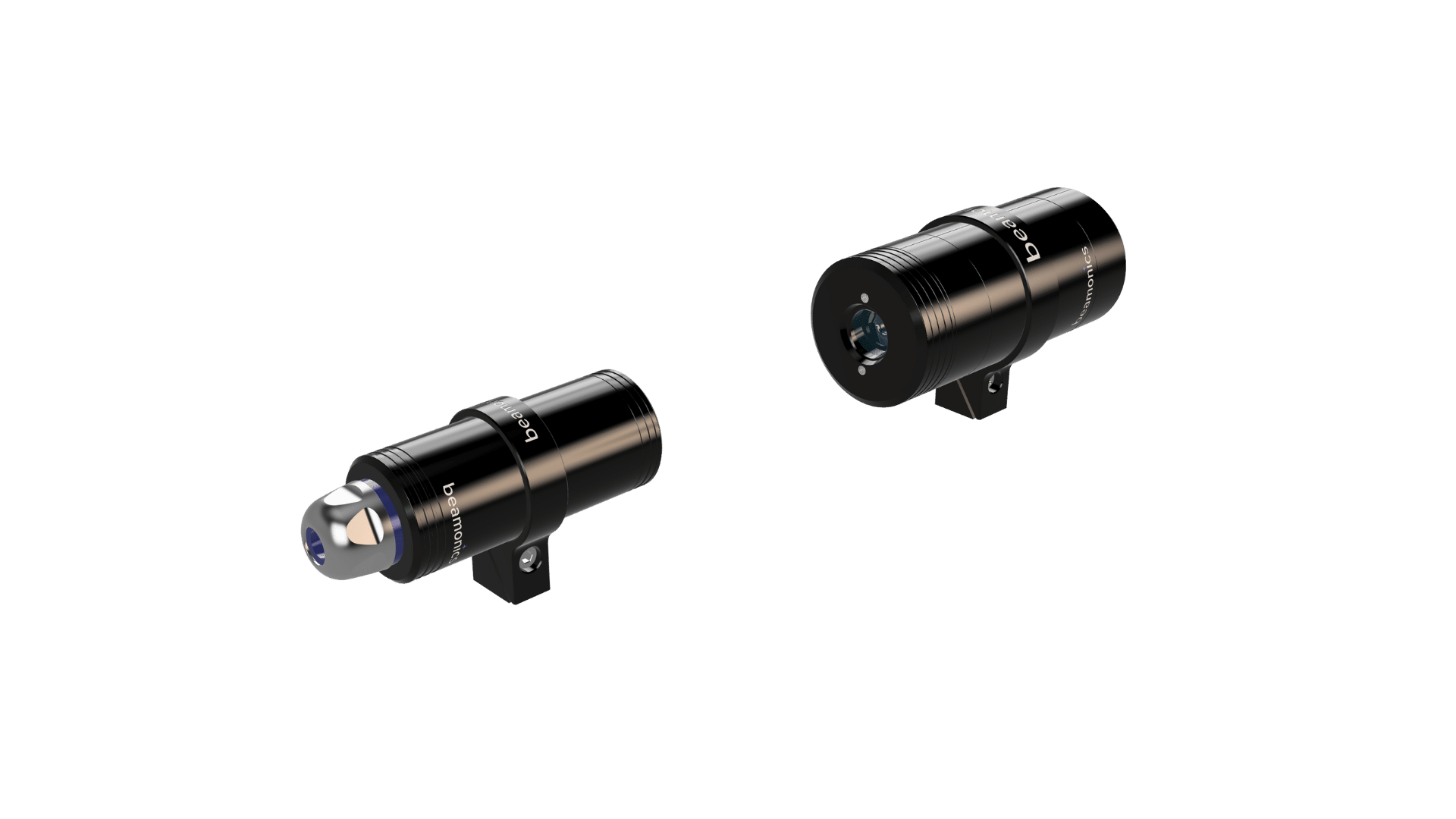
BeamStack and BeamCell provide 4-20 mA analog outputs (passive or active), RS-485/422 serial interfaces (full duplex and half duplex), relay outputs (normally open / normally closed), trigger inputs, and an expansion connector carrying I²C, SPI, UART, additional 4-20 mA, and 0-10 V signals. This interface set covers the standard requirements for PLC and DCS integration without external converters or gateways.
For applications requiring synchronised measurement across multiple analyzers, BeamStack and BeamCell support daisy-chain sync signals and a master clock input/output, enabling coordinated data acquisition across a measurement network.
Communication link length is rated to 30 m at up to 3 Mbit/s over the RS-485 connection. For longer distances, standard RS-485 repeaters or conversion to fibre or Ethernet at the DCS marshalling cabinet extend the reach without affecting the analyzer.
Environmental robustness
Both BeamStack and BeamCell are IP67-rated, withstanding temporary immersion and complete dust ingress protection. Operating temperature range is −10 °C to 55 °C. Supply voltage is 15 to 32 VDC at 5 W typical power consumption. Startup time is approximately 5 seconds from power-up to measurement state.
These specifications place the instruments in the same environmental class as industrial field transmitters, which means they can be mounted directly at the process without a separate analyser shelter in most applications.
Process control applications
Combustion air-fuel ratio control
O₂ and CO in the flue gas are the primary feedback variables for combustion control. BeamStack measures both in situ across the flue-gas duct, with O₂ precision of 6 ppm and CO precision of 0.2 ppm at 1 m path length under standard test conditions (1 s averaging, 1 atm, 300 K). The path-averaged measurement captures the spatial mean across the duct, reducing the influence of stratification that can bias single-point zirconia probes. Real-time updates feed the combustion controller with current data, enabling tighter air-fuel ratio management and reducing excess air losses.
Inerting and atmosphere control
Many processes require controlled atmospheres with specific O₂ concentrations: nitrogen blanketing in chemical storage, inert atmosphere in powder metallurgy, protective gas in heat treatment furnaces, or controlled-atmosphere packaging in food production. The control task is to maintain O₂ below a threshold, often a few percent, sometimes a few ppm, by adjusting the flow of inert gas.
BeamCell’s O₂ precision of 30 ppm at 0.185 m path length supports control well below the percent-level thresholds common in inerting applications. For trace O₂ control in semiconductor or specialty chemical processes, BeamStack at longer path lengths provides finer precision, with 6 ppm at 1 m.
Chemical dosing and reaction control
In processes where a gas-phase reactant is dosed into a reactor or scrubber, the gas concentration downstream of the dosing point is the natural control variable. NH₃ injection in selective catalytic reduction (SCR) for NOₓ abatement, HCl scrubbing in waste incineration, and SO₂ removal in flue-gas desulphurisation all require continuous measurement of the target gas to control the dosing rate and avoid both under-dosing (incomplete treatment) and over-dosing (reagent waste and potential secondary emissions).
Beamonics TDLAS measures NH₃ at 0.2 ppm precision (BeamStack, 1 m) and HCl where available, providing the feedback signal for the dosing controller. Careful line selection is an inherent part of the Beamonics design process, and the analyzers as such offer little to no cross-interference from matrix gases present in flue-gas or reactor exhaust.
Biogas composition monitoring
In anaerobic digestion, the CH₄:CO₂ ratio in the biogas indicates digester health and determines the calorific value of the gas. BeamCell measures both species from a single sample tap, with CH₄ precision of 1 ppm and CO₂ precision of 2.5 ppm at 0.185 m. Continuous monitoring supports automated feed-rate control and early detection of process upsets that would otherwise reduce biogas yield or destabilise the microbiology.
Trace contaminant control
In semiconductor fabrication, pharmaceutical production, and specialty chemical synthesis, trace levels of H₂O, HF, or NH₃ in process gases can cause product defects or yield losses. BeamStack achieves H₂O precision of 0.2 ppm and HF precision of 0.01 ppm at 1 m path length, providing the sensitivity needed for contamination monitoring in high-purity gas systems.
Practical Considerations
Beamonics TDLAS measures one gas per laser module. A process that requires simultaneous control of three or four gas species needs either multiple laser channels in the same instrument (where available) or multiple analyzers. This is architecturally different from FTIR, which captures all species in one measurement. For process control applications involving one to three specific gases, the single-species selectivity of TDLAS is an advantage rather than a limitation. For comprehensive multi-component analysis, FTIR or GC may be more appropriate as analytical instruments, with TDLAS handling the specific gases that require fast, continuous feedback.
Beamonics instruments can handle transmission down to very low levels thanks to the proprietary platform, allowing processes to run uninterrupted without regular cleaning and re-calibration.
The 4-20 mA output represents a single gas concentration on a configured range. If the process can produce concentrations outside this range, such as during startup or upset conditions, the output saturates and the controller loses visibility. The digital serial interface provides the full concentration value without range limitations and should be preferred for critical control applications where over-range conditions are possible.
Closing Remark
The distinction between a gas analyzer and a process control instrument is not about the spectroscopy. It is about whether the instrument delivers data that a control system can act on: fast enough, stable enough, and connected through the right interfaces. Beamonics TDLAS analyzers designed for industrial deployment occupy this intersection, which is why they appear increasingly in control loop specifications alongside the traditional temperature, pressure, and flow transmitters that have long defined the process automation layer.