In Brief
Wastewater treatment facilities generate gas-phase ammonia at nearly every process stage, from headworks through aeration, scrubbing, and sidestream dewatering. Uncontrolled NH₃ emissions contribute to eutrophication, pose health risks, and indicate suboptimal biological treatment. Beamonics TDLAS analyzers provide selective, drift-resistant NH₃ measurements in the humid, dusty, and corrosive conditions typical of these plants, across configurations ranging from cross-stack monitoring of individual ducts to remote screening of large halls and outdoor basins.
Why gas-phase ammonia matters in wastewater treatment
Ammonia released from wastewater processes enters the atmosphere as gas-phase NH₃ and, once deposited, drives eutrophication in soils, rivers, lakes, and coastal waters. At the plant itself, elevated ammonia concentrations affect the health and wellbeing of workers and surrounding communities. From a process perspective, the NH₃ concentration in off-gas is a useful indicator of biological treatment performance: rising ammonia in the air above an aeration basin can signal a shift in nitrification efficiency before it shows up in liquid-phase analytics.
Concentrations vary widely across a single facility. Perimeter levels may sit at tens of ppb, while ducts, enclosed headworks, and scrubber inlets can reach tens or hundreds of ppm. This range, combined with the humid, particle-laden, and sometimes corrosive atmosphere inside a wastewater plant, creates a measurement environment that degrades conventional sensors through drift, poisoning, and cross-interference. Reliable NH₃ data requires an analyzer that tolerates these conditions without frequent recalibration.
Measurement challenges specific to wastewater environments
Wastewater plants present a combination of conditions that stress most gas detection technologies. Relative humidity is consistently high, often near saturation, and temperature can swing from near-freezing in winter to above 40 °C in summer depending on geography and process configuration. Aerosol droplets, dust, and chemical mist are common, particularly near aeration basins and scrubber outlets. Ammonia itself is highly water-soluble and adsorptive, meaning it readily sticks to surfaces, sample lines, and sensor elements.
Electrochemical NH₃ sensors are susceptible to humidity-driven drift and cross-sensitivity to H₂S and other sulfur compounds present in wastewater off-gas. Chemiluminescence analyzers require reagent consumables and heated sample conditioning. Photoacoustic detectors can be affected by H₂O interference. Each of these methods introduces maintenance burden, consumable cost, or measurement uncertainty that compounds over months of continuous operation.
How TDLAS addresses these conditions
Tunable diode laser absorption spectroscopy (TDLAS) works by scanning a narrowband laser across a specific NH₃ absorption line in the near-infrared. As the laser light passes through the gas, ammonia molecules absorb photons at that wavelength in proportion to their concentration. The instrument computes concentration from the fraction of light absorbed, following the Beer-Lambert law.
Because the measurement references a molecular absorption line whose spectral position is fixed by physics, the reading is inherently stable over time. There is no sensor element that ages, no electrolyte that depletes, and no catalytic surface that can be poisoned. Careful line selection is an inherent part of the Beamonics design process, and the analyzers as such offer little to no cross-interference from H₂O, CO₂, and other species present in wastewater off-gas. TDLAS is a real-time technique with practically no response delay: the optical measurement is instantaneous, fast enough to capture transient plumes and feed real-time control loops.
Continuous self-diagnostics monitor optical power and signal quality. If transmission drops due to window fouling, heavy condensation, or particulate loading, the analyzer reports a signal quality warning rather than producing a false concentration reading. Beamonics instruments can handle transmission down to very low levels thanks to the proprietary platform, allowing processes to run uninterrupted without regular cleaning and re-calibration.
Specification overview
| Parameter | Typical requirement | TDLAS configuration | Notes |
|---|---|---|---|
| Concentration range | 0.05–200 ppm NH₃ | Cross-stack (BeamStack) | Suitable for basins, ducted exhausts, scrubber control |
| Area coverage | 10–100 m | Remote (BeamSight) | Across large basins, halls, galleries; intermittent plumes |
| Multi-point sampling | 1 ppm precision at 1 s | Extractive (BeamCell) | Rapid sequencing for diagnostics and compliance verification |
| Response | Real-time optical readout | All configurations | Real-time alarms and control feedback |
| Operating temperature | 0–50 °C, high relative humidity | All configurations | Covers seasonal and process temperature variation |
| Output interfaces | 4–20 mA, RS-485, RS-422, Modbus, USB | All configurations | Direct PLC and PC integration |
Cross-stack monitoring of basins and ducts
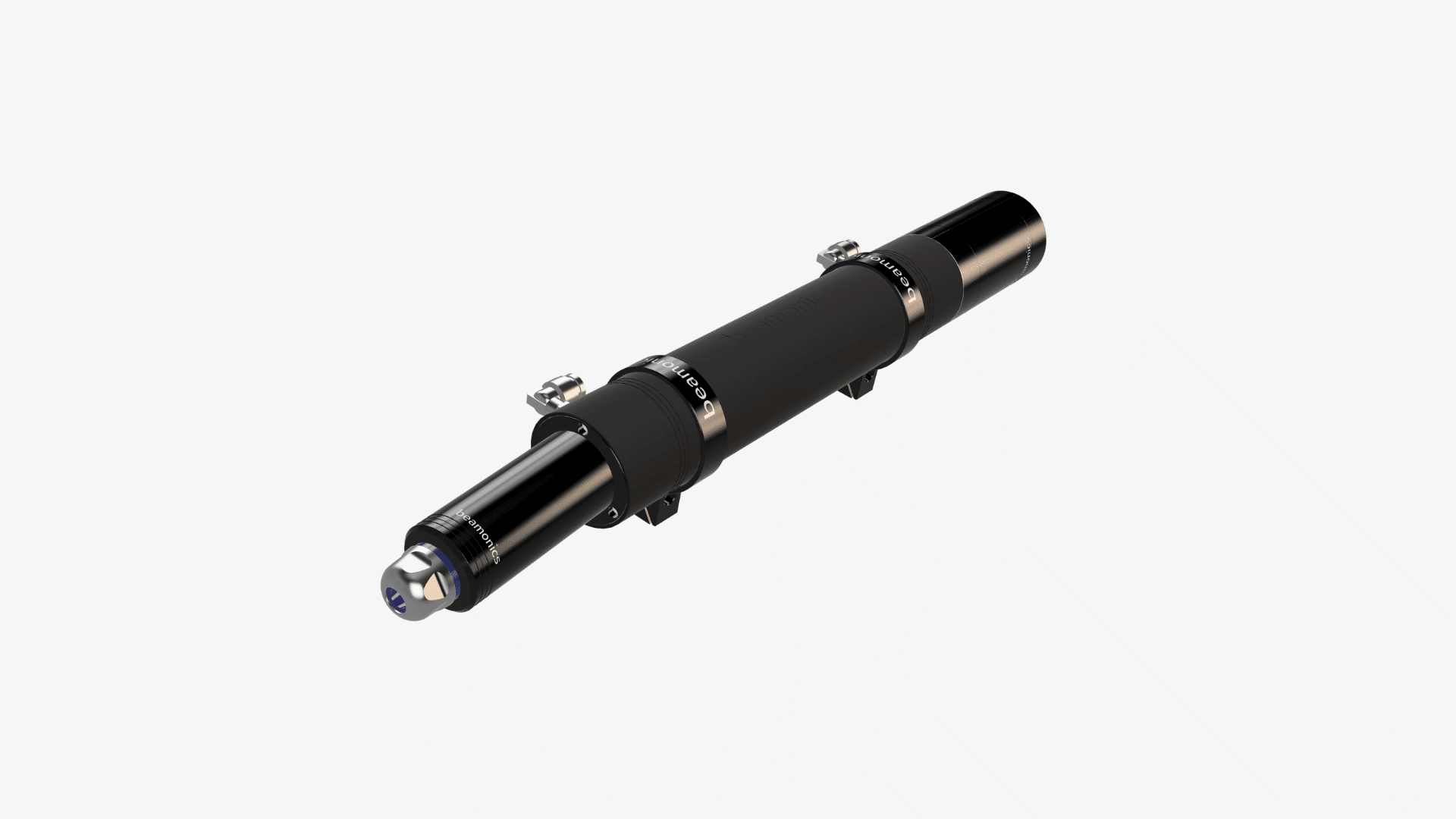
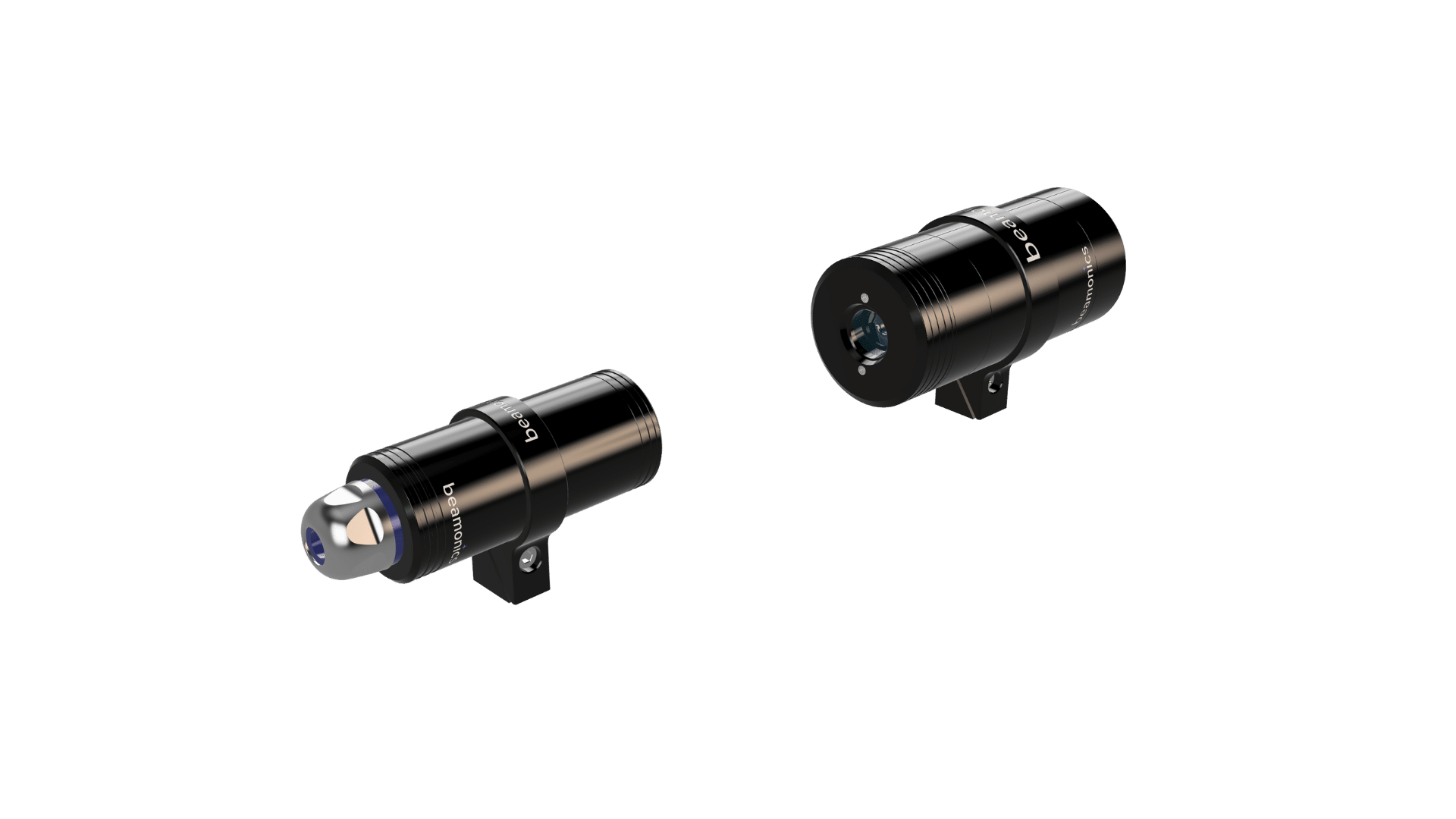
The most direct measurement approach places a TDLAS transmitter and receiver on opposite sides of a duct, basin, or enclosed space. The laser beam traverses the gas volume, and the analyzer reports the path-averaged NH₃ concentration in real time.
This configuration suits ventilation ducts, packed-bed scrubbers, ammonia-stripping towers, and thermal or catalytic treatment units where the gas flows through a defined cross-section. It also works across open aeration basins, with the transmitter and receiver mounted on opposite basin walls or on brackets spanning the basin width.
The path-averaged reading captures the bulk concentration across the entire beam path, which is more representative than a single point measurement in turbulent or non-uniform flows. BeamStack provides NH₃ precision down to 0.2 ppm under standard test conditions (L = 1 m, t = 1 s, P = 1 atm, T = 300 K), with IP67-rated mechanics and industrial I/O interfaces for direct integration with process control systems.
For scrubber efficiency verification, mounting a BeamStack upstream and downstream of the packed bed provides continuous, real-time measurement of abatement performance without extractive sampling or reagent-based analyzers.
Extractive multi-point diagnostics
Where multiple measurement points are needed, or where in-situ optical access is not available, an extractive configuration draws gas samples through tubing to a central analyzer. BeamCell uses an acid-resistant flow chamber (0.185 m optical path length) with push-in gas connectors (G1/8) for 6 mm or 8 mm tubing. Automated valve sequencing allows a single analyzer to sample from up to 16 points in rapid succession.
Typical multi-point applications include comparing NH₃ at aeration inlet and outlet, measuring pre- and post-scrubber concentrations from the same instrument, and profiling ammonia across sidestream dewatering or digester conditioning processes. Because the TDLAS measurement responds within seconds, cycling through 16 sample points takes only tens of seconds rather than the minutes required by slower analyzer technologies.
BeamCell achieves NH₃ precision of 1 ppm under standard test conditions (L = 0.185 m, t = 1 s, P = 1 atm, T = 300 K), with corrosion-resistant wetted materials suitable for the acidic and humid sample streams common in wastewater applications.
One important consideration for extractive NH₃ measurement: ammonia is highly water-soluble and adsorbs readily to surfaces. Sample lines should be kept short and heated to prevent uncontrolled gas losses between the sampling point and the analyzer. This applies to any extractive NH₃ measurement technology, not only TDLAS.
Remote screening of large areas
BeamSight detects NH₃ at a distance without physical contact with the gas. In its fixed configuration (0.7 kg) or battery-powered portable configuration (1.0 kg, approximately 5 hours of operating life), it measures the integrated gas concentration along a line of sight to a wall, structure, or reflector at distances up to 30 m without a reflector, or up to 100 m with a reflecting surface.
This configuration suits outdoor screening of headworks buildings, dewatering halls, basin clusters, and long corridors where installing point sensors or cross-stack systems at every location would be impractical. BeamSight reports NH₃ with a detection precision of 15 ppm·m under standard test conditions (Range = 8 m, t = 0.5 s, P = 1 atm, T = 300 K), enabling identification of emission hotspots and spatial mapping of ammonia distribution across a facility.
A portable BeamSight can be used for periodic surveys to locate the highest-emitting areas, informing decisions about where to install permanent cross-stack or extractive monitoring. A fixed installation provides continuous area surveillance with automatic alarms when concentrations exceed a defined threshold.
Integration and installation considerations
Humidity and condensation are the primary installation concerns. Because NH₃ dissolves readily in water, in-situ measurement (cross-stack or open-path) is generally preferred over extractive sampling wherever optical access permits. In-situ configurations measure the gas directly in the process stream, avoiding the sample losses and response delays introduced by tubing and condensation traps.
Representativity in complex airflows deserves attention. A single beam path across a turbulent basin or large hall may not capture all plumes, particularly if emissions are intermittent or spatially non-uniform. Adding a second cross-stack path at a different location, or scanning with a BeamSight across the area, can provide a more complete picture of the concentration distribution while still delivering absolute concentration values.
For emissions reporting and regulatory compliance, NH₃ concentration data should be paired with volumetric flow rate and temperature measurements to calculate mass emission rates. All Beamonics analyzers provide continuous digital and analog outputs suitable for integration with data logging and reporting systems.
Instrument configurations for wastewater NH₃
BeamStack, cross-stack: NH₃ precision down to 0.2 ppm (L = 1 m, t = 1 s, P = 1 atm, T = 300 K), IP67 mechanics, industrial digital and analog interfaces. Suited for duct monitoring, scrubber control, and basin coverage where line-of-sight mounting is feasible.
BeamCell, extractive: NH₃ precision down to 1 ppm (L = 0.185 m, t = 1 s, P = 1 atm, T = 300 K), acid-resistant flow chamber, push-in fittings for 6–8 mm tubing, multi-point sequencing capability. Suited for process diagnostics, pre/post-scrubber comparison, and compliance documentation.
BeamSight, remote stand-off: NH₃ detection precision of 15 ppm·m (Range = 8 m, t = 0.5 s, P = 1 atm, T = 300 K) at distances up to 30 m (100 m with reflector), fixed or portable configurations. Suited for hotspot identification, area screening, and facilities with limited permanent mounting infrastructure.
Practical considerations
Optical measurement methods require line-of-sight. Installations where the beam path is permanently obstructed are not candidates for in-situ TDLAS without mitigation measures such as purge systems or shorter path lengths.
Open-path and cross-stack configurations report a path-averaged concentration. Where a true point measurement is required, for example for compliance sampling at a defined location within a duct, an extractive configuration with a defined sampling probe is more appropriate.
Sites with high turbulence and spatially variable emissions may need multiple analyzers or a scanning remote analyzer to capture the full concentration distribution. A single fixed beam path provides a representative average along that path, but cannot resolve spatial gradients perpendicular to the beam.
Ammonia’s solubility and surface adsorption make extractive sample handling non-trivial. Short, heated sample lines with appropriate materials (PTFE or stainless steel) minimize losses, but some delay and attenuation relative to in-situ measurement is unavoidable.
Ammonia off-gas as a process optimization signal
Beyond emissions compliance and worker safety, gas-phase NH₃ data can serve as a fast-responding process indicator. Changes in ammonia off-gas from aeration basins correlate with shifts in nitrification and denitrification performance. A rising NH₃ trend in the headspace may indicate overloading, insufficient aeration, or a change in influent composition before liquid-phase ammonia analyzers register the shift. Integrating real-time gas-phase NH₃ into the plant’s control strategy can tighten process response and reduce both emissions and chemical consumption.