In Brief
Tunable diode laser absorption spectroscopy (TDLAS) analyzers differ from electrochemical (EC) and catalytic bead sensors in response time, calibration requirements, maintenance burden, sensor lifespan, chemical selectivity, and diagnostic capability. For applications that demand measurement speed, long-term stability, and minimal maintenance, Beamonics TDLAS provides a clear operational advantage. Where budgets are constrained and routine maintenance schedules are already in place, conventional sensors can remain a reasonable choice for less demanding applications.
The comparison most procurement teams underestimate
Fixed-point gas detectors exist to protect people, equipment, and product quality. The majority of installed bases still use electrochemical sensors for toxic gas detection and catalytic bead sensors for combustible gases. Both technologies are well understood, widely available, and backed by decades of field experience.
TDLAS analyzers have gained traction where those conventional approaches create recurring operational problems: sensors requiring frequent recalibration, degrading in chemically aggressive environments, or responding too slowly to capture short-duration process events. The choice between technologies is rarely obvious from a datasheet alone, and it is almost never settled by purchase price. The comparison below addresses the practical differences criterion by criterion.
Measurement principle
TDLAS operates by scanning a narrowband laser across a specific molecular absorption line and measuring how much light the gas attenuates over an optical path. Each gas species absorbs at a distinct set of wavelengths determined by molecular physics, and the concentration is computed from the measured attenuation following the Beer-Lambert law. The signal is absolute: it references the gas molecule itself rather than an external calibration standard. This is what enables long-term stability without routine recalibration.
Electrochemical sensors use a different approach. The target gas reacts at an electrode, producing a current that is converted (after linearization) into a concentration reading. Catalytic bead sensors oxidize combustible gases on a heated element and measure the resulting heat release. Both methods depend on the physical and chemical state of the sensing element remaining stable over time, and in practice, it does not.
Response time
TDLAS is a real-time technique with practically no response delay. The optical measurement is instantaneous, with the achievable time resolution governed by the spectroscopy rate and, in extractive configurations, by the sample transport time. This makes the technology suitable for real-time alarm systems and process control feedback loops.
EC and catalytic sensors depend on gas diffusion and electrochemical reaction kinetics. Typical T90 values range from 30 seconds to two minutes. A process release lasting only a few seconds may be under-reported or missed entirely. In safety applications where concentrations can rise rapidly, that gap carries real consequences.
Warm-up and startup behavior
A TDLAS analyzer stabilizes within seconds of power-up. There is no electrolyte to equilibrate and no catalytic element to bring to operating temperature. Plant-ready systems reach a valid measurement state within approximately 5 seconds of startup.
EC and catalytic sensor heads often require minutes to hours to stabilize after power cycling or sensor replacement. This complicates commissioning and creates ambiguity during service events: readings may reflect a sensor that has not yet settled rather than actual process conditions.
Calibration practice
Laser-based analyzers are factory-calibrated against known physical gas-line parameters and reference gases. The calibration is set during production. Routine field span calibrations are not required because the measurement reference is the molecular absorption line itself, not an instrument zero that can drift. Verification is handled through built-in self-referencing, zero checks, or periodic functional checks with a known reference gas.
EC and catalytic sensors drift with use. Most site safety protocols and insurance requirements mandate monthly or quarterly bump tests and periodic span calibrations. Sensors exposed to high concentrations, elevated temperatures, or aggressive chemicals may need more frequent attention or early replacement.
Maintenance and consumables
TDLAS optics are non-consumptive. There are no electrolytes to replenish, no beads to replace, no cartridges to swap. Typical maintenance consists of a visual inspection and optics cleaning on a 6 to 12 month interval, with a particulate filter check where applicable.
EC and catalytic sensors require recurring consumables: filter changes, electrolyte replenishment, sensor cartridge replacements, and functional checks. Unplanned failures become more likely in environments with high solvent loads, silicone vapors, or sulfur-containing compounds.
A further complication is that a degraded EC or catalytic sensor does not always report its own compromised state. It may continue to produce a reading that appears valid while its sensitivity has been substantially reduced. Beamonics TDLAS analyzers, by contrast, continuously monitor optical power and internal signal levels. A degraded signal or internal fault is reported as an explicit instrument fault rather than producing a misleading gas reading.
Sensor longevity and drift
Laser modules and detectors are solid-state components with expected operating lifetimes in the range of ten years when used within specifications. Because the measurement is referenced to a fixed molecular transition, baseline drift is negligible over that period.
EC and catalytic sensing elements age from first use. Usable life is typically 6 to 24 months, depending on exposure conditions and the presence of sensor poisons. Drift accumulates between calibrations. Over a ten-year installation, the cumulative replacement and recalibration costs for conventional sensors can substantially exceed the initial instrument cost.
Chemical selectivity and contamination resistance
Careful line selection is an inherent part of the Beamonics design process, and the analyzers as such offer little to no cross-interference. Heavy particulate loads or condensed water droplets can attenuate the optical signal, but Beamonics instruments can handle transmission down to very low levels thanks to the proprietary platform, allowing processes to run uninterrupted without regular cleaning and re-calibration.
EC and catalytic sensors are susceptible to both cross-sensitivity and chemical poisoning. Silicones, H₂S, HF, sulfuric acid, and solvent vapors can all degrade performance, sometimes permanently. Non-target gases can produce false positive readings. In environments where these species are present, conventional sensor reliability cannot be assumed without more frequent testing.
Diagnostics and fail-safe behavior
Beamonics TDLAS analyzers perform continuous self-checks on optical power levels, detector signal, and internal reference values. A degraded signal or internal fault is reported as a distinct instrument fault, separate from a gas alarm. The system fails safe in a way that is transparent to the operator.
Most conventional detectors provide limited diagnostic output: run time, power status, and in some cases an estimate of remaining sensor life. A sensor poisoned by chemical exposure may continue to appear operational while delivering unreliable readings. Detecting this condition requires deliberate testing with a known reference gas.
Installation geometry and area coverage
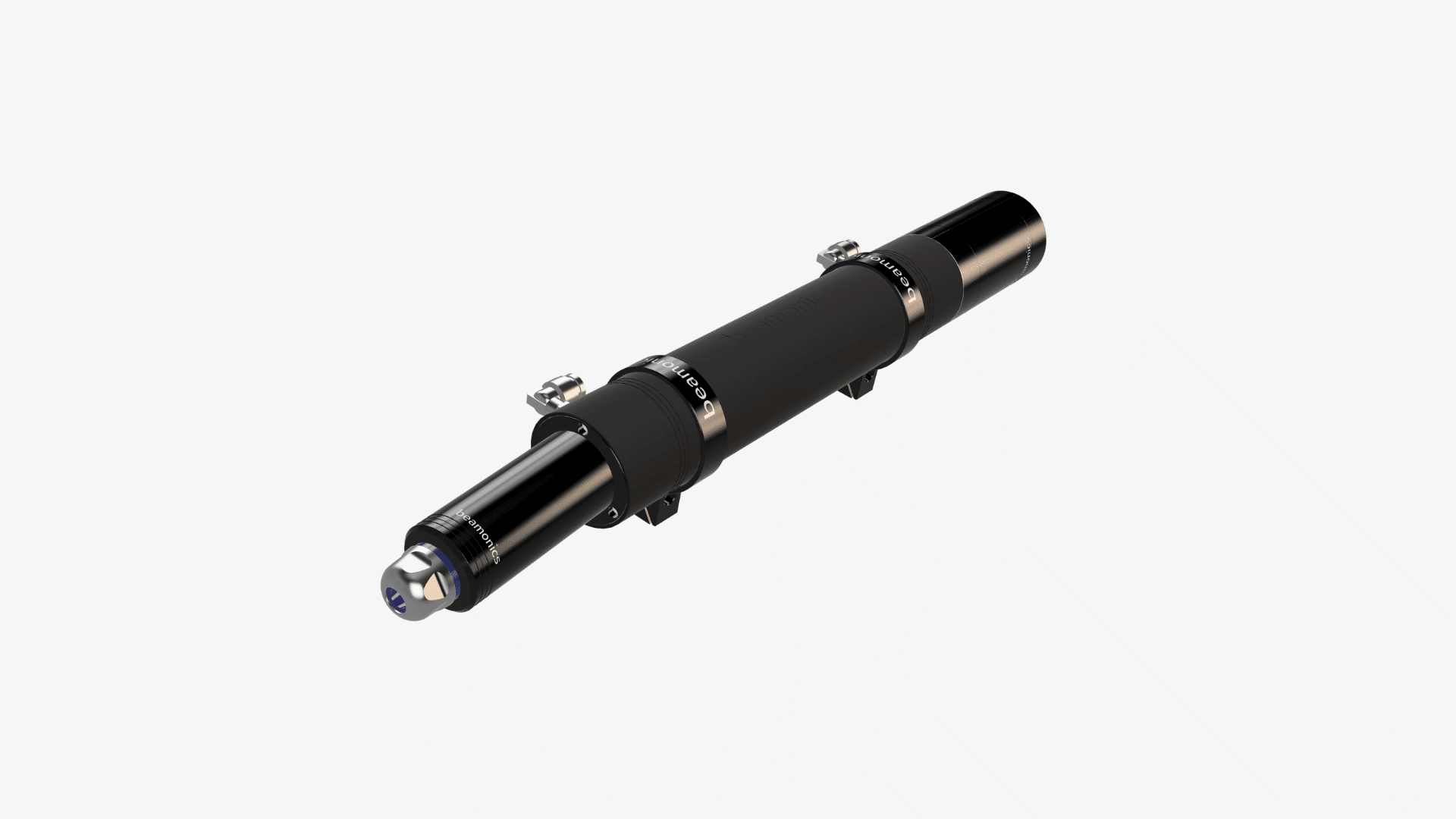
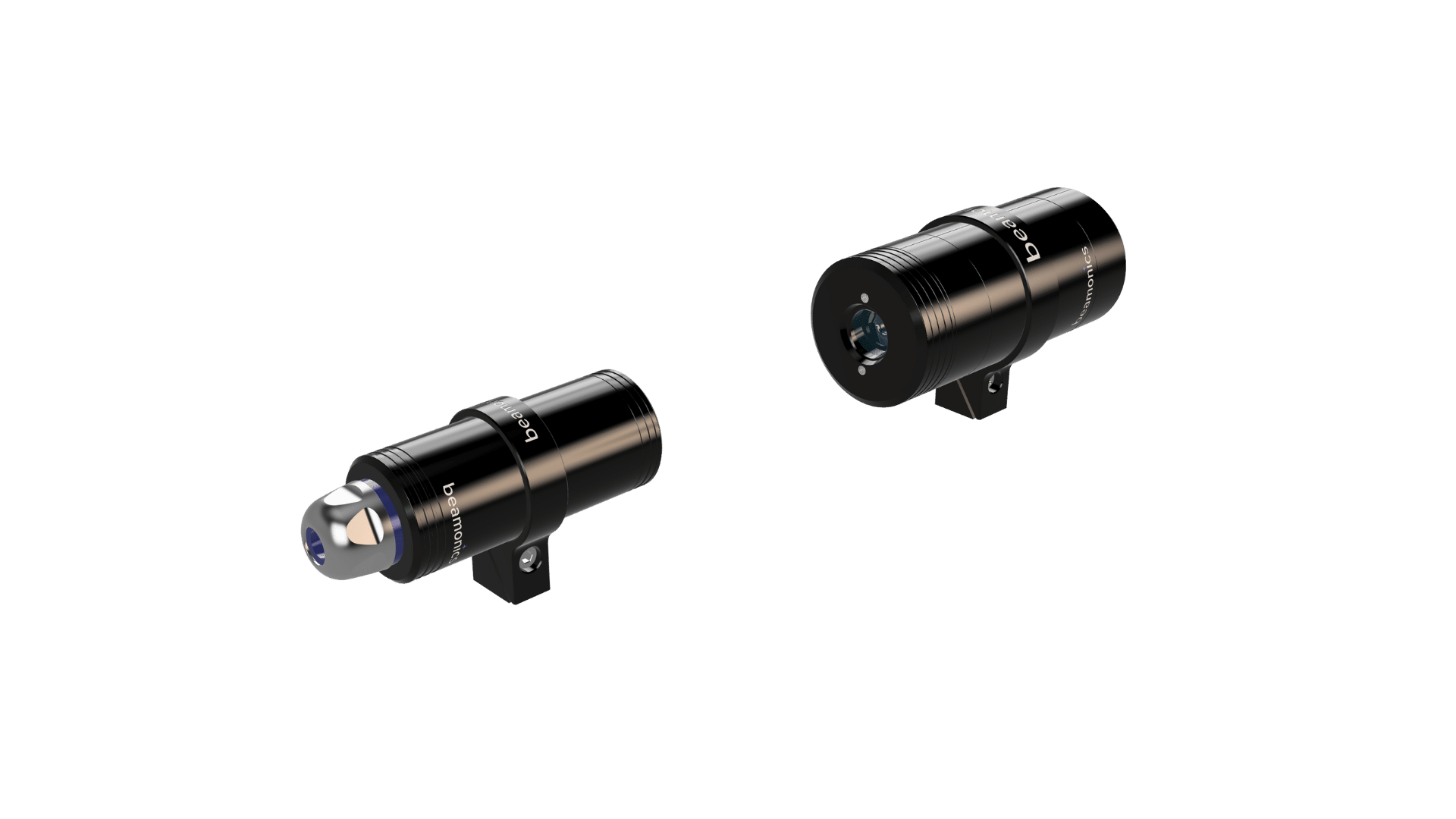
Beamonics TDLAS analyzers are available in configurations that address different measurement geometries. A cross-stack or open-path configuration, with transmitter and receiver mounted on opposite sides of a duct or open space, measures the average concentration across the full optical path. This can be more representative than a point reading in non-uniform gas flows. An extractive flow-through configuration draws a gas sample through an internal measurement cell, enabling multi-point sampling from a single instrument by switching between inlet connections. A remote stand-off configuration detects gas concentrations without physical contact, at distances up to 30 m (or 100 m with a reflector), which is useful for monitoring inaccessible locations or large open areas.
Traditional fixed-point sensors are inherently localized. Covering a large area requires installing multiple sensors, each with its own wiring, commissioning, and maintenance overhead.
Specification summary
| Criterion | TDLAS | Traditional fixed-point |
|---|---|---|
| Response time | Real-time optical readout | T90 of 30–120 s typical |
| Warm-up / startup | Measuring within ~5 s | Minutes to hours |
| Calibration | Factory-calibrated; no routine field span | Monthly/quarterly bump tests and span calibrations |
| Maintenance | Visual inspection and optics cleaning, 6–12 month intervals | Recurring: filters, electrolyte, cartridge replacements |
| Sensor lifespan | ~10 years for optics | 6–24 months typical |
| Chemical selectivity | Little to no cross-interference; optical attenuation manageable | Susceptible to poisoning from silicones, H₂S, HF, acids, solvents |
| Drift | Negligible; self-referencing | Accumulates between calibrations |
| Diagnostics | Continuous self-checks; explicit fault alarms | Limited; degraded state often undetectable without testing |
| Area coverage | Cross-stack, extractive multi-point, or remote stand-off options | Localized point sensors; multiple units required for area coverage |
Closing Remark
The practical performance gap between TDLAS and conventional fixed-point sensors becomes most visible over time: in calibration logs, in service call frequency, and in whether the data from a sensor can be trusted under abnormal process conditions. Catalytic beads remain practical for %LEL area monitoring in clean, non-condensing environments where frequent functional testing is already embedded in routine, and EC sensors can serve applications with relaxed response requirements and established maintenance schedules. Lifecycle cost and measurement integrity increasingly favor Beamonics TDLAS for critical applications, even where the initial capital comparison favors conventional sensors.