In Brief
Biogas production depends on a controlled anaerobic digestion process whose health and output are reflected directly in the gas composition. The CO₂-to-CH₄ ratio indicates digester stability and energy content. H₂S concentration determines corrosion risk, upgrading load, and compliance with grid injection specifications. Beamonics TDLAS analyzers provide continuous, drift-free measurement of these gases in the high-humidity, high-CO₂, H₂S-laden environment that biogas plants present, without the calibration burden and sensor degradation that limit conventional analyzers in this application.
Background
Biogas is produced by anaerobic digestion: microorganisms break down organic matter in the absence of oxygen, producing a gas mixture that is typically 50 to 70 vol% CH₄, 30 to 50 vol% CO₂, saturated with water vapor, and containing trace to percent-level concentrations of H₂S, NH₃, and siloxanes depending on the feedstock. The CH₄ content determines the energy value of the gas. The CO₂ content represents the non-combustible fraction that must be removed if the biogas is to be upgraded to biomethane for grid injection or vehicle fuel use. H₂S is corrosive to engines, turbines, and piping, toxic to personnel, and subject to strict limits in both raw biogas utilization and upgraded biomethane specifications.
The composition of raw biogas is not fixed. It varies with feedstock type (agricultural waste, food waste, sewage sludge, energy crops), loading rate, digester temperature, retention time, and the balance between the microbial populations responsible for the successive stages of digestion. A well-functioning digester at steady state produces gas with a relatively stable CH₄/CO₂ ratio. When the process is disturbed, whether by a sudden change in feedstock, an overloading event, a temperature deviation, or an accumulation of inhibitory substances such as ammonia or volatile fatty acids, the gas composition shifts. CO₂ concentration typically rises relative to CH₄ during process upset, because the methanogenic archaea that convert intermediate products to CH₄ are more sensitive to environmental stress than the acid-forming bacteria that produce CO₂.
This makes the gas composition, particularly the CO₂/CH₄ ratio and the H₂S concentration, a real-time diagnostic of digester health. An analyzer that measures these gases continuously, with sufficient accuracy and speed to detect changes as they develop, gives the plant operator the information needed to adjust feeding, mixing, or temperature before a process upset progresses to the point of requiring a costly recovery period.
What gas composition reveals about digester performance
CO₂ as a process stability indicator
In a stable anaerobic digestion process, the four main microbial stages (hydrolysis, acidogenesis, acetogenesis, and methanogenesis) operate in approximate balance. The intermediate products of each stage are consumed by the next at roughly the rate they are produced. When this balance is disrupted, intermediate products accumulate.
A common failure mode is organic overloading, where feedstock is added faster than the methanogenic population can convert volatile fatty acids to CH₄. VFA accumulation lowers pH, which further inhibits methanogenesis. The gas-phase signature of this process is a rising CO₂ fraction and a falling CH₄ fraction, because acid-forming bacteria continue producing CO₂ while CH₄ production slows.
A step change in CO₂ from, for example, 38 vol% to 44 vol% over a few hours is a meaningful signal. Seen in real time, the operator can reduce the feed rate, adjust the feedstock mix, or add buffering agents to stabilize pH before the digester enters a fully acidified state that may take days or weeks to recover from. If the CO₂ change is detected only when the gas is sampled manually once per shift or once per day, the window for intervention may have already closed.
CH₄ content and energy value
The volumetric energy content of biogas scales directly with its CH₄ fraction. Biogas at 60 vol% CH₄ has roughly 21.5 MJ/m³; at 50 vol% CH₄, it drops to about 17.9 MJ/m³. For plants that use biogas directly in combined heat and power (CHP) engines, knowing the CH₄ content in real time allows the engine control system to adjust air-fuel ratio and ignition timing for the actual gas composition rather than an assumed average. This improves electrical efficiency, reduces CO and NOx emissions from the engine, and prevents misfiring or knocking that shortens engine life.
For plants that upgrade biogas to biomethane, CH₄ measurement at the digester outlet defines the feed gas composition entering the upgrading system. Measurement at the upgrading outlet verifies that the product gas meets the CH₄ specification (typically above 95 to 97 vol%) and that CH₄ losses through the tail gas are within acceptable limits.
H₂S: corrosion, safety, and compliance
Hydrogen sulfide is produced during anaerobic digestion from the reduction of sulfate and the degradation of sulfur-containing amino acids. Concentrations in raw biogas range from tens of ppm to several thousand ppm depending on feedstock sulfur content. At the lower end, H₂S is a nuisance that accelerates corrosion. At the upper end, it is acutely toxic (the immediately dangerous to life or health concentration is 100 ppm) and severely corrosive to engines, heat exchangers, and catalytic converters.
Most biogas plants include some form of H₂S removal: biological desulfurization (air dosing into the digester headspace), iron-based adsorbents, activated carbon, or chemical scrubbing. The effectiveness of these systems must be verified continuously, because H₂S breakthrough damages downstream equipment within hours, not days. For grid injection of biomethane, H₂S limits are typically below 5 ppm and in some specifications below 3 ppm.
Beamonics TDLAS provides H₂S measurement with the selectivity needed to distinguish it from other sulfur compounds and the stability needed to monitor at low ppm levels over months without recalibration. BeamStack achieves H₂S analysis precision of 0.3 ppm at a 1 m path length, and BeamCell reaches 1.5 ppm at a 0.185 m path length, both under standard test conditions (1 s averaging, 1 atm, 300 K).
Measurement points in a biogas plant
A biogas facility has several locations where gas analysis serves different purposes. The analyzer configuration depends on what is being measured and why.
Digester headspace or gas outlet. This is where the raw biogas composition reflects the current state of the digestion process. Continuous measurement of CO₂ and CH₄ here provides the process stability signal described above. H₂S measurement at this point characterizes the sulfur load entering the desulfurization system and helps size or adjust that system. The gas at this location is warm (typically 35 to 55 °C depending on whether the digester is mesophilic or thermophilic), saturated with water vapor, and may contain foam or entrained liquid during upset conditions.
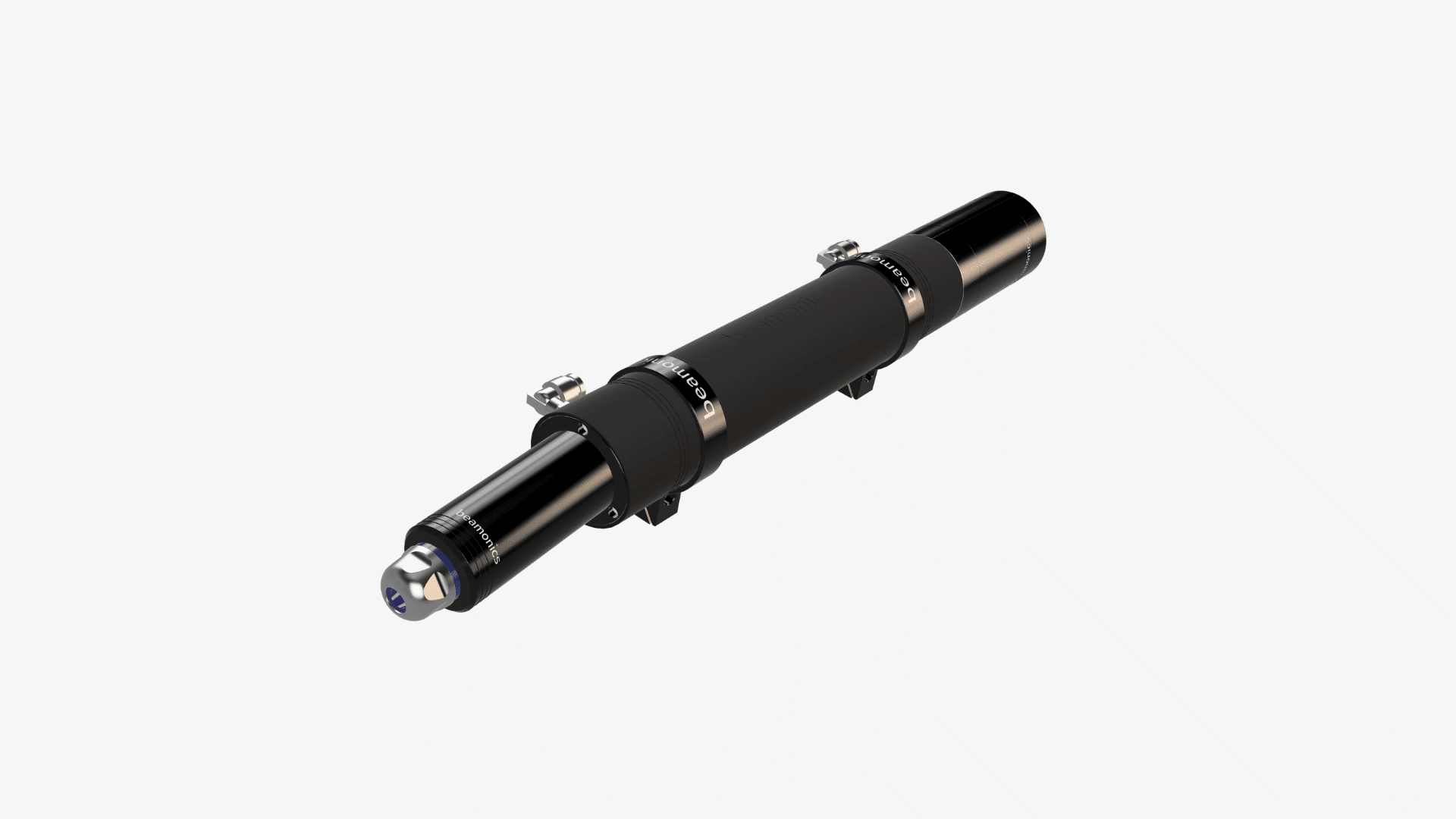
A cross-stack BeamStack installation across the biogas outlet pipe provides in-situ measurement without extracting a sample, avoiding the condensation and H₂S adsorption problems that affect sample lines in this high-moisture environment. BeamStack achieves CO₂ precision of 0.5 ppm and CH₄ precision of 0.2 ppm at 1 m path length under standard test conditions. While biogas CO₂ concentrations are in the 30 to 50 vol% range and CH₄ is 50 to 70 vol%, this precision means that small changes in the ratio, on the order of 0.1 to 0.5 vol%, are clearly resolved and can be trended over time to detect developing process deviations.
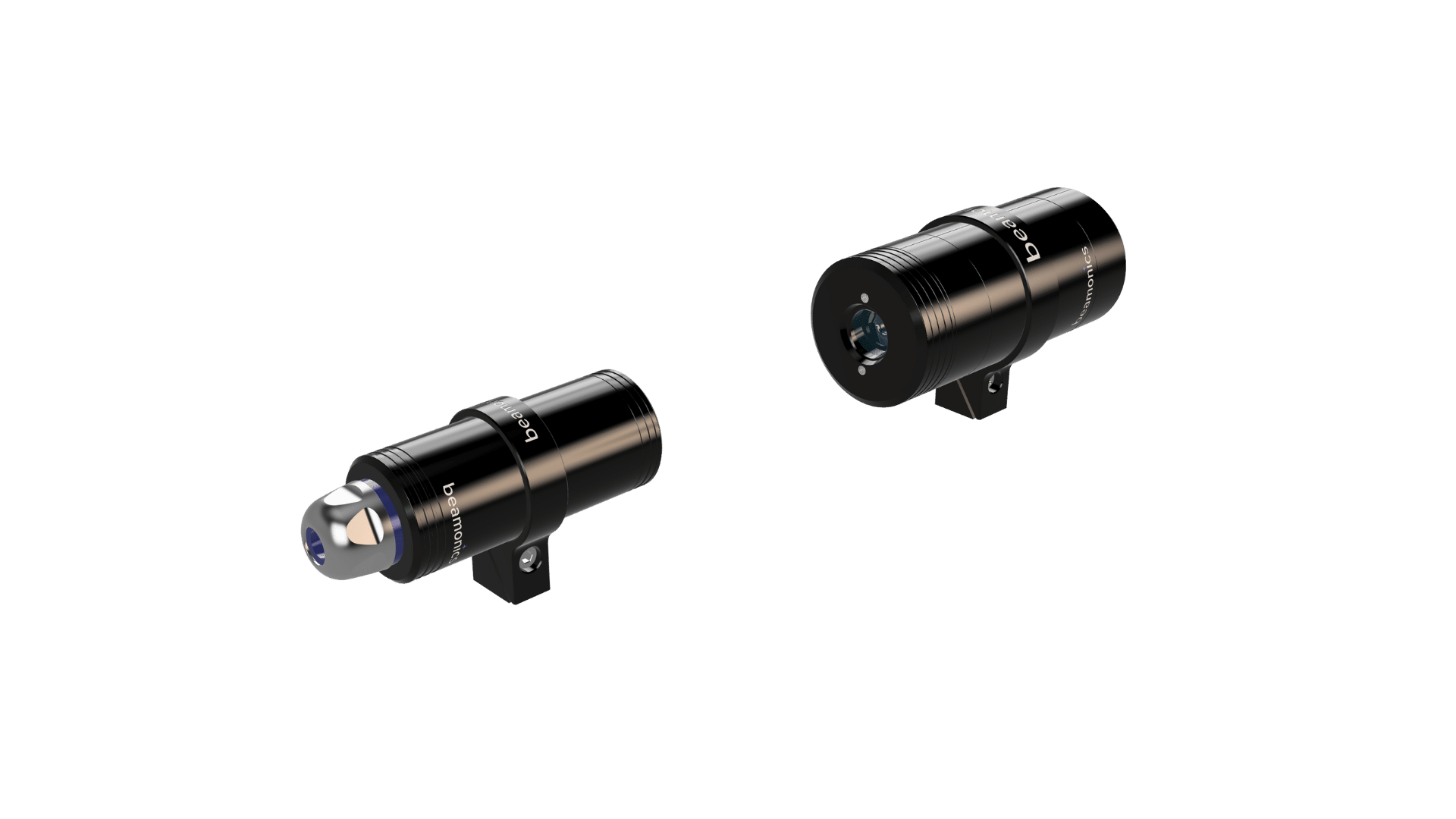
After desulfurization. H₂S measurement downstream of the desulfurization unit verifies removal performance. A rising H₂S reading indicates adsorbent exhaustion, biological culture imbalance, or an increase in feedstock sulfur loading. Early detection prevents H₂S breakthrough to the CHP engine or the upgrading system. An extractive BeamCell sampling from the gas line after desulfurization provides point concentration in ppm, which can be compared directly against the equipment manufacturer’s H₂S tolerance specification and the grid injection limit.
Before and after biogas upgrading. Upgrading systems (pressure swing adsorption, membrane separation, amine scrubbing, or water wash) separate CO₂ from CH₄ to produce biomethane. The CO₂ concentration at the upgrading inlet defines the separation load. The CH₄ concentration at the product outlet confirms that the biomethane meets grid specification. The CO₂ and CH₄ concentrations in the tail gas determine the CH₄ slip, the fraction of methane lost with the removed CO₂. CH₄ slip is both an economic loss and, because methane is a potent greenhouse gas, an environmental concern that some jurisdictions regulate. Measuring CO₂ and CH₄ at all three points (inlet, product, tail gas) allows the operator to calculate separation efficiency, optimize membrane pressure or amine circulation rate, and detect membrane degradation or amine foaming before the product falls out of specification.
CHP engine inlet. For plants that burn biogas directly, measuring CH₄ and CO₂ at the engine inlet allows the engine management system to adjust combustion parameters for the actual gas composition. This is particularly relevant for plants that co-digest multiple feedstocks with different composition profiles, or that receive gas from multiple digesters.
Instrument selection for biogas applications
| Measurement point | Recommended instrument | Key gases | Notes |
|---|---|---|---|
| Digester gas outlet (in-situ) | BeamStack, cross-stack | CO₂, CH₄, H₂S | No sample extraction; avoids condensation in lines |
| After desulfurization | BeamCell, extractive | H₂S | Point concentration for threshold compliance |
| Upgrading inlet | BeamCell, extractive | CO₂, CH₄ | Feed composition for upgrading control |
| Upgrading product outlet | BeamCell, extractive | CO₂, CH₄ | Grid spec verification |
| Upgrading tail gas | BeamCell, extractive | CH₄, CO₂ | CH₄ slip quantification |
| CHP engine inlet | BeamStack or BeamCell | CO₂, CH₄ | Combustion control input |
| Fugitive emission surveys | BeamSight, stand-off | CH₄ | Leak detection around digesters, valves, membranes |
Specification reference
| Parameter | BeamStack | BeamCell | BeamSight |
|---|---|---|---|
| CO₂ precision | 0.5 ppm | 2.5 ppm | 40 ppm·m |
| CH₄ precision | 0.2 ppm | 1 ppm | 15 ppm·m |
| H₂S precision | 0.3 ppm | 1.5 ppm | 25 ppm·m |
| H₂O precision | 0.2 ppm | 1 ppm | — |
| Path length (test conditions) | 1 m | 0.185 m | 8 m |
| Analysis rate | 1 Hz to 10 kHz | 1 Hz to 10 kHz | — |
| Operating temperature | −10 °C to 55 °C | −10 °C to 55 °C | −10 °C to 50 °C |
| IP classification | IP67 | IP67 | IP44 |
All precision values under standard test conditions: P = 1 atm, T = 300 K, 1 s averaging (BeamStack and BeamCell) or 0.5 s averaging at 8 m range (BeamSight). Largest of 1% relative and specified precision applies.
Why Beamonics TDLAS suits the biogas environment
Biogas presents a challenging measurement environment for several specific reasons, and each one maps to a characteristic of Beamonics TDLAS.
High and variable humidity. Raw biogas is saturated with water vapor at digester temperature. When the gas cools in transport piping, condensation occurs. Electrochemical sensors exposed to condensation experience accelerated electrolyte degradation. NDIR analyzers with broadband infrared absorption suffer cross-interference from H₂O, which is a strong and variable absorber across the mid-infrared. Careful line selection is an inherent part of the Beamonics design process, and the analyzers as such offer little to no cross-interference: the CO₂, CH₄, and H₂S measurement lines are spectrally separated from H₂O features, so humidity does not affect the readings. For in-situ installations, the measurement occurs in the gas stream itself, avoiding the condensation-in-sample-lines problem entirely.
H₂S exposure. H₂S is corrosive and is a known poison for electrochemical sensor elements and catalytic beads. EC sensors for CH₄ or CO₂ exposed to H₂S in raw biogas experience accelerated degradation and drift. Beamonics TDLAS uses optical measurement only: the narrowband laser beam passes through the gas without any physical contact between a sensor element and the H₂S molecules. There is no sensor to poison.
Wide concentration ranges. CO₂ in biogas ranges from 30 to 50 vol%. CH₄ ranges from 50 to 70 vol%. H₂S ranges from ppm to thousands of ppm. After upgrading, CO₂ may be below 2 vol% and H₂S below 5 ppm. A single Beamonics TDLAS analyzer handles the full range for each gas without mode switching, because absorption and concentration follow the Beer-Lambert law continuously. The same BeamCell that measures 40 vol% CO₂ at the digester outlet can measure 1.5 vol% CO₂ at the upgrading product outlet.
Calibration-free operation. Biogas plants, particularly agricultural installations, often operate with minimal technical staff. An analyzer requiring monthly bump tests with reference gas bottles and quarterly span calibration represents a significant operational burden. Beamonics TDLAS is factory-calibrated against molecular absorption parameters and self-references during every measurement cycle. No reference gas, no field calibration schedule, no risk of operating with a drifted sensor between calibration visits.
Practical Considerations
Biogas is saturated with water vapor, and extractive sample lines will experience condensation unless heated or insulated. For BeamCell extractive installations, keeping sample lines short, heated above the gas dew point, and sloped to drain condensate prevents blockage and sample loss. In-situ BeamStack installations across the gas pipe avoid this issue entirely.
Siloxanes, present in biogas from sewage sludge and landfill gas, deposit as silicon dioxide on hot surfaces inside engines and on sensor elements. TDLAS optics are not heated sensor surfaces in contact with the gas, so siloxane deposition is not a direct concern for the measurement. In extractive configurations, siloxane-laden gas can deposit on flow cell windows over time. Beamonics instruments can handle transmission down to very low levels thanks to the proprietary platform, allowing processes to run uninterrupted without regular cleaning and re-calibration.
The CH₄/CO₂ ratio is a more informative process indicator than either gas measured alone, because it normalizes for variations in total gas production rate. A stable ratio with changing absolute concentrations indicates that the digester biology is healthy and responding to load changes normally. A shifting ratio indicates a change in the metabolic balance between acid-forming and methane-forming organisms.
For fugitive emission monitoring around digester tanks, gas holder membranes, and piping connections, BeamSight provides stand-off CH₄ detection at 15 ppm·m precision (8 m range, 0.5 s averaging). Biogas plants are increasingly subject to methane emission reporting requirements, and periodic surveys with a portable stand-off analyzer identify leaks that fixed-point sensors placed between mounting locations would miss.
Foam events in digesters can carry liquid and particulate into the gas outlet. Extractive sample systems should include a knockout pot or coalescing filter upstream of the BeamCell to protect the flow cell from liquid carryover. In-situ BeamStack installations are more tolerant of short-term aerosol exposure.
Closing Remark
Gas analysis in biogas production is not a single measurement at a single point. It is a multi-gas, multi-location measurement task that tracks digester health, controls upgrading performance, verifies compliance with grid specifications, and monitors for fugitive emissions across the facility. Beamonics TDLAS provides a consistent measurement technology across all of these roles: the same selectivity, the same calibration-free stability, and the same immunity to the H₂S, humidity, and wide concentration ranges that define the biogas environment. The practical result is continuous, trustworthy gas composition data with less maintenance intervention than the conventional sensor technologies it replaces.