In Brief
Oxygen concentration in confined spaces must stay within the 19.5% to 23.5% range to protect workers and prevent fire hazards. TDLAS-based analyzers offer fast, drift-free O₂ measurement that avoids the calibration burden and degradation modes of electrochemical sensors, though the choice of measurement configuration depends on the geometry and access constraints of the space being monitored.
Background
Confined spaces, defined broadly as enclosed or partially enclosed areas not designed for continuous occupancy, present a well-understood but persistent hazard: the atmosphere inside can deviate from safe limits without any visible or olfactory warning. Oxygen depletion below 19.5 vol% risks asphyxiation. Enrichment above 23.5 vol% increases the flammability of clothing, oils, and other materials that are otherwise difficult to ignite. Both conditions can develop quickly when ventilation is poor, when inert gases displace air, or when oxidation and biological processes consume available oxygen.
The measurement task itself is straightforward: monitor O₂ continuously, at percent-level concentrations, with enough speed and reliability that alarms trigger before conditions become dangerous. Where the problem becomes less straightforward is in selecting an analyzer technology that remains accurate over time without frequent recalibration, functions in the temperature and humidity extremes common to industrial confined spaces, and integrates cleanly into existing alarm and control systems.
How conventional O₂ sensors work, and where they fall short
Most installed confined-space O₂ monitors use electrochemical (EC) cells. An EC sensor generates a current proportional to the partial pressure of oxygen at an electrode. The technology is mature, inexpensive, and available in compact form factors suitable for personal gas detectors.
The limitations are also well documented. EC cells drift as the electrolyte ages, requiring bump tests on a monthly or quarterly cycle and full span calibration at regular intervals. Sensor lifespan is typically 12 to 24 months depending on exposure conditions, after which the cell must be replaced. High humidity, temperature extremes, and exposure to certain chemicals (particularly solvents, silicones, and strong acids) accelerate degradation and can cause the sensor to under-report O₂ concentration without flagging a fault. Cross-sensitivity to other gases is a further concern in environments where O₂ depletion coincides with the presence of H₂S, CO, or volatile organic compounds.
For personal four-gas monitors carried by workers entering a confined space, electrochemical cells remain the standard and are likely to stay so: the form factor, cost, and regulatory acceptance are difficult to match. The limitations become more consequential for fixed or semi-permanent monitoring installations, where continuous unattended operation, integration with plant safety systems, and low maintenance burden are priorities.
TDLAS for oxygen measurement
Tunable diode laser absorption spectroscopy (TDLAS) measures gas concentration by scanning a narrow-band infrared laser across a molecular absorption line specific to the target species. The attenuation of the laser beam through the gas volume is governed by the Beer-Lambert law, and the concentration is calculated directly from the absorption profile. Because the measurement references a physical property of the oxygen molecule rather than a chemical reaction, it does not drift with time and does not consume a sensing element.
Oxygen absorbs in the near-infrared around 760 nm, within a band that is spectrally well-separated from common interferents. TDLAS O₂ measurements are not affected by cross-sensitivity to CO, CO₂, H₂S, or hydrocarbons, which is a practical advantage in environments where multiple hazardous gases may be present alongside depleted oxygen.
Response time is governed by the spectroscopy rate and, in extractive configurations, by the sample transport time. The Beamonics platform completes a full spectroscopic analysis cycle in as little as 100 microseconds. For confined-space monitoring, where conditions can change within seconds when purge gas is released or ventilation fails, this speed provides a meaningful safety margin compared to EC sensors with T90 times in the range of 30 to 120 seconds.
Choosing a measurement configuration
The Beamonics product line offers two configurations relevant to confined-space O₂ monitoring.
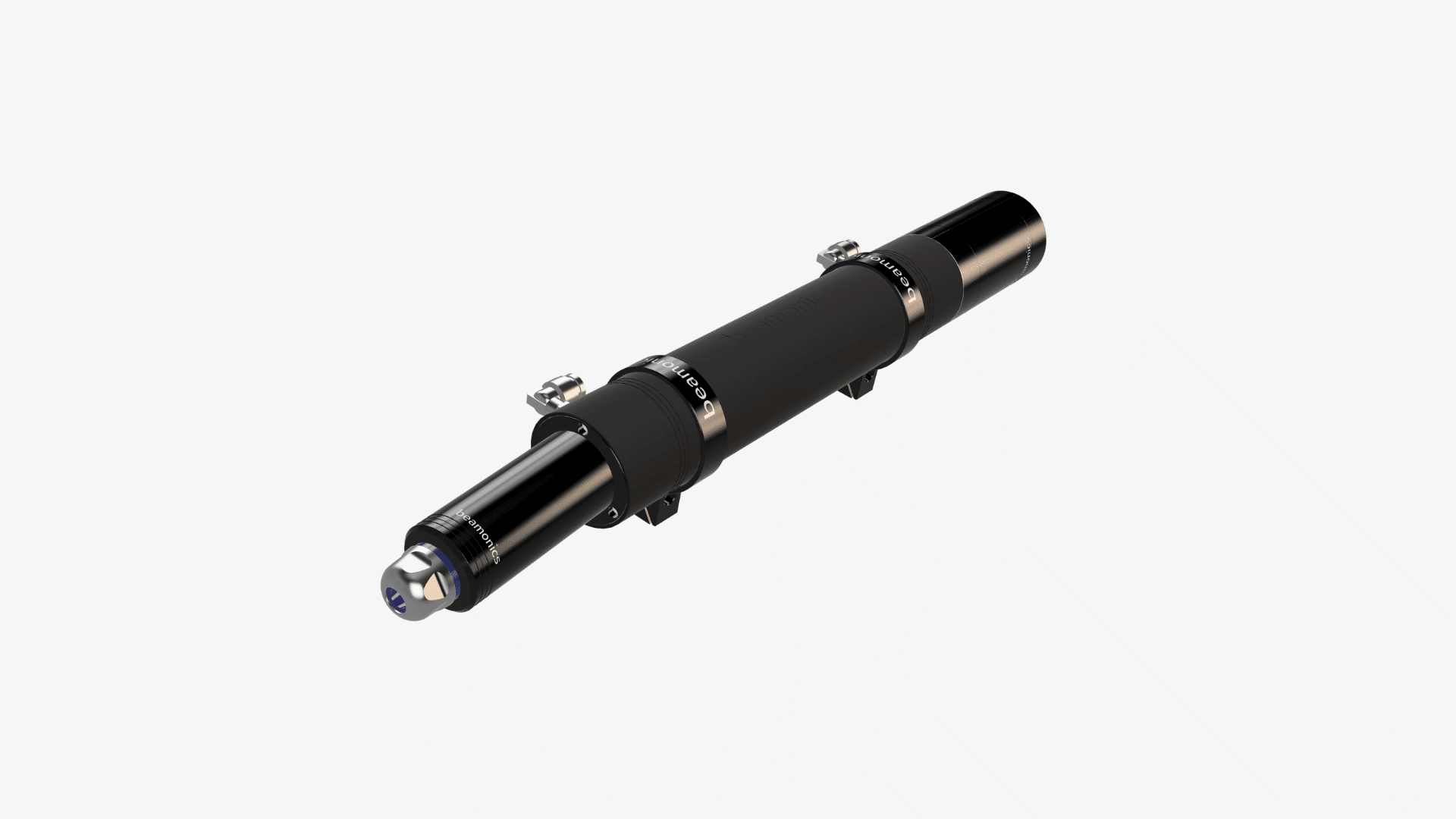
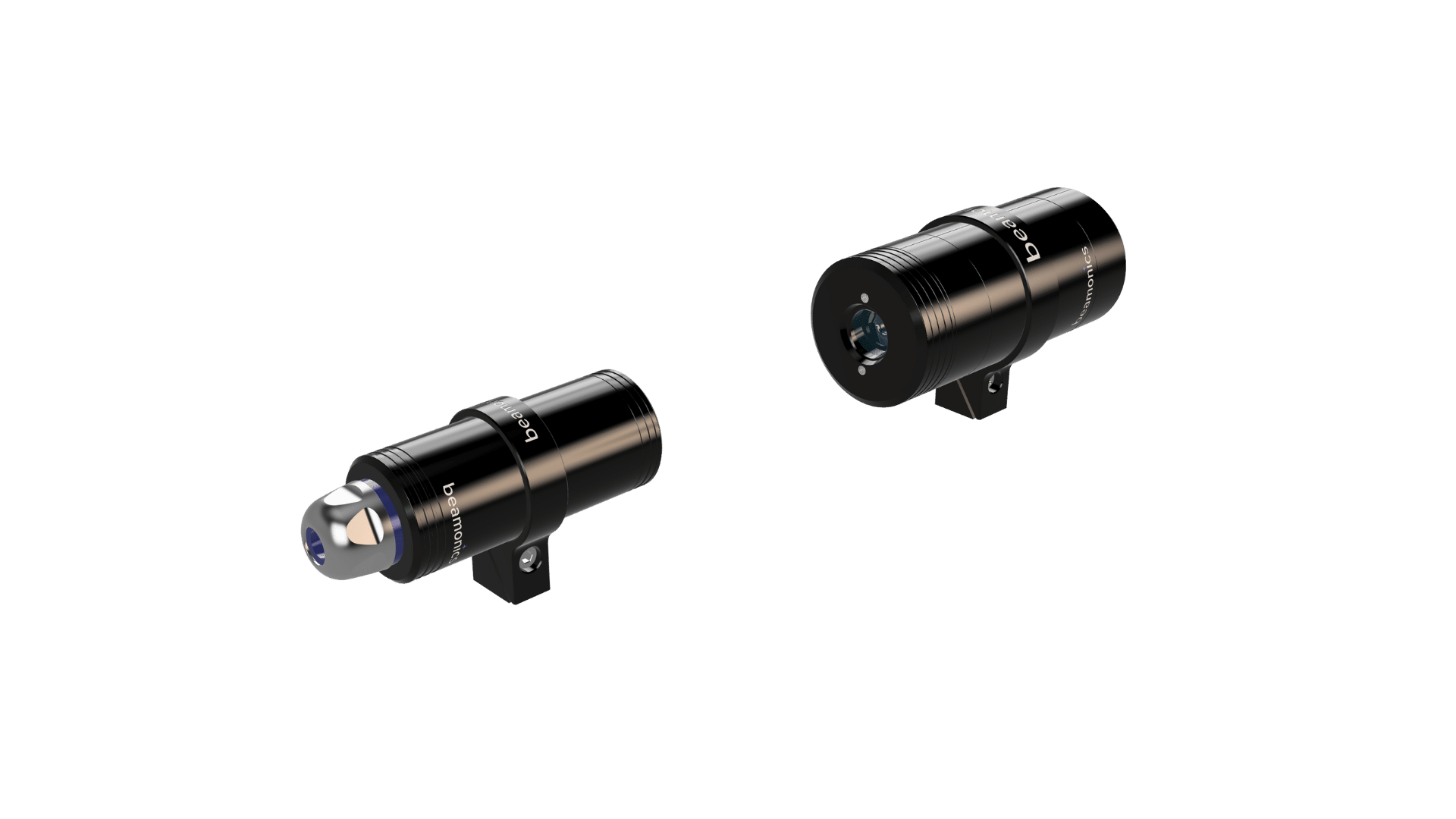
The BeamStack (BM-H-3) operates as a cross-stack or open-path analyzer, with a transmitter and receiver mounted on opposite sides of the monitored volume. This configuration measures the path-averaged O₂ concentration across the laser beam, providing spatial coverage that a point sensor cannot. It suits applications where the confined space has defined entry points or duct connections that allow line-of-sight installation: tank hatches, ventilation ducts, or access corridors. O₂ analysis precision is 6 ppm at a 1 m path length under standard test conditions (1 s averaging, 1 atm, 300 K), per the BM-H-3 datasheet (TDS R1.7.1). At the percent-level concentrations relevant to confined-space safety, this precision is well within the requirements.
The BeamCell (BM-H-3) operates as an extractive flow-through analyzer. Gas is drawn from the confined space through tubing and passed through a compact measurement cell with a 0.2 m optical path. This approach is appropriate when direct optical access across the space is not feasible, when the space geometry does not support line-of-sight mounting, or when multiple zones need to be monitored sequentially from a single analyzer using a valve manifold. O₂ analysis precision is 30 ppm at 0.2 m under standard test conditions (1 s averaging, 1 atm, 300 K), per the BM-H-3-BC datasheet (TDS R1.6.1). The extractive configuration adds a sample transport delay that depends on tubing length and flow rate, but the spectroscopy itself remains sub-second.
Both instruments share the same IP67-rated enclosure, data interface set (RS-485/422, USB, 4-20 mA, relay outputs), and 24 VDC nominal supply. Startup time is approximately 5 seconds from power-up to measurement state, which is relevant for portable or intermittently powered installations.
Specification summary for O₂ monitoring
| Parameter | BeamStack (BM-H-3) | BeamCell (BM-H-3) |
|---|---|---|
| Measurement type | Cross-stack / open-path | Extractive flow-through |
| O₂ precision | 6 ppm (at 1 m) | 30 ppm (at 0.2 m) |
| Analysis rate | Up to 10 kHz | Up to 10 kHz |
| Startup time | ~5 s | ~5 s |
| IP rating | IP67 | IP67 |
| Supply voltage | 15–32 VDC | 15–32 VDC |
| Power consumption | 5 W typical | 5 W typical |
| Operating temperature | -10 °C to 55 °C | -10 °C to 55 °C |
Standard test conditions: t = 1 s, P = 1 atm, T = 300 K. Precision is the largest of 1% relative and the specified value. Sources: BM-H-3 TDS R1.7.1, BM-H-3-BC TDS R1.6.1.
Application contexts
Oxygen monitoring in confined spaces spans several industries, each with its own typical geometries and hazard profiles.
In oil and gas operations, storage tanks, pressure vessels, and pipeline segments are routinely entered for inspection and maintenance. Nitrogen purging prior to hot work, or residual hydrocarbon vapours displacing air, can deplete O₂ rapidly. A cross-stack TDLAS analyzer mounted across a tank access port can provide continuous pre-entry and during-entry monitoring without placing a sensor inside the space.
In wastewater treatment, below-grade pump stations, digesters, and sewer access chambers combine oxygen depletion with H₂S and methane hazards. The extractive configuration suits these environments, where physical access is restricted and the atmosphere is often saturated with moisture. The BeamCell’s acid-resistant flow chamber tolerates the corrosive conditions common in wastewater off-gas.
In chemical processing, reactor vessels, drying chambers, and storage silos may contain inerted atmospheres or residual process gases. O₂ monitoring confirms that inerting is complete before maintenance, and that safe atmospheric conditions are restored before re-entry. The absence of cross-sensitivity in TDLAS means the O₂ reading remains reliable regardless of what other species are present in the headspace.
In mining, ventilation shafts and stopes can develop localised oxygen depletion, particularly in areas with active oxidation of sulfide minerals or where blasting gases accumulate. The fast response of TDLAS is relevant here, where conditions can change within a single ventilation cycle.
Practical considerations
TDLAS requires optical line-of-sight between the laser source and detector (or, in extractive mode, an unobstructed sample path). Heavy dust, fog, or condensed water droplets in the beam path attenuate the laser signal and degrade measurement precision. In cross-stack installations exposed to particulate-laden atmospheres, purge air on the optical windows or heated window assemblies may be needed to maintain signal quality.
For personal safety during confined-space entry, portable four-gas monitors (typically electrochemical) remain the accepted practice and are required by most regulatory frameworks. TDLAS serves a complementary role as a fixed or semi-permanent area monitor: providing continuous, drift-free data to a control room or safety system, logging concentration history for compliance documentation, and enabling pre-entry atmospheric assessment from outside the space.
The Beamonics analyzers output data via 4-20 mA, relay contacts, and digital serial protocols, all of which integrate directly with standard PLC and SCADA systems. Alarm thresholds for O₂ depletion and enrichment can be configured at the analyzer or managed by the receiving control system.
Electrochemical O₂ sensors remain appropriate where the application calls for a low-cost, disposable sensing element and where monthly bump testing and annual replacement are part of an established maintenance routine. The case for TDLAS is strongest where continuous unattended operation is needed, where maintenance access is difficult or costly, or where the measurement must remain reliable in chemically aggressive or high-moisture environments.
Closing remark
The regulatory and practical requirements for confined-space oxygen monitoring are well established. The choice of measurement technology increasingly comes down to total cost of ownership and operational reliability over multi-year service intervals, rather than the upfront cost of the sensing element. As facilities reduce staffing at remote sites and extend intervals between planned maintenance shutdowns, the value of an O₂ analyzer that does not drift, does not consume reagents, and continuously verifies its own signal integrity becomes more tangible.
Related links
- BeamStack (BM-H-3) product page
- BeamCell (BM-H-3) product page
- TDLAS vs. electrochemical cells and catalytic bead sensors
- Oxygen measurement in industrial processes