In Brief
TDLAS analyzers complete a full spectroscopic measurement in as little as 100 microseconds, enabling analysis rates up to 10 kHz. This speed is genuinely useful in applications where gas concentrations change on timescales of seconds or less: combustion control, leak detection, process upset response, and turbulent flow characterisation. In applications where the process changes slowly or where sample transport dominates the total response time, the spectroscopy speed is less consequential than other factors such as stability, selectivity, and maintenance burden.
Background
The phrase “real-time monitoring” appears frequently in gas analysis literature, but its practical meaning varies widely depending on the application. For a combustion control loop responding to load changes in a boiler, real-time means sub-second updates that allow the controller to track actual process dynamics. For an ambient air quality station reporting hourly averages, real-time means something closer to continuous data collection with periodic aggregation. For a leak detection survey, real-time means that the operator sees a concentration reading while still pointing the instrument at the suspected source, not minutes later when a laboratory result returns.
These are different measurement problems, and the value of a fast analyzer differs accordingly. An instrument that delivers 1,000 readings per second is transformative for the first case, helpful for the third, and largely irrelevant for the second. Understanding where speed matters, and where other performance characteristics matter more, is essential for selecting the right gas analysis technology and configuring it appropriately.
How TDLAS achieves high-speed measurement
In a TDLAS analyzer, a tunable diode laser scans across a molecular absorption line by modulating the laser drive current. The entire scan, from baseline through the absorption feature and back, completes in a single current ramp cycle. On the Beamonics platform, this cycle time is as short as 100 microseconds, corresponding to a raw spectroscopy rate of 10 kHz.
Each scan produces a complete absorption profile from which the gas concentration is calculated. There is no chemical reaction to wait for, no diffusion barrier to traverse, no chromatographic separation to complete. The measurement speed is limited only by the electronics and the signal-to-noise requirement: faster scanning means less averaging and therefore higher noise on each individual reading. The configurable analysis rate (from 1 Hz to 10 kHz on the BeamStack and BeamCell) allows the user to trade speed against precision for the specific application.
This is fundamentally different from the response-time characteristics of other gas analysis technologies. Electrochemical sensors depend on gas diffusion through a membrane and an electrochemical reaction at an electrode, producing T90 times (time to reach 90% of a step change) of 30 to 120 seconds. Paramagnetic O₂ analyzers, when used with extractive sample conditioning, add transport delays of 10 to 30 seconds on top of the analyzer response. Gas chromatographs operate in batch cycles of minutes to tens of minutes. Even NDIR analyzers, which are also optical, typically operate at 1 to 10 Hz due to detector response characteristics and the need for chopped-beam or filter-wheel modulation.
Where speed changes the measurement outcome
Combustion control
Boiler load changes, burner modulation cycles, and fuel-quality variations produce O₂ and CO fluctuations in the flue gas on timescales of seconds. A measurement that updates at 1 Hz or faster can feed a control loop that tracks these dynamics in real time. A measurement that updates every 30 to 60 seconds, as is typical of extractive paramagnetic O₂ analyzers or zirconia probes with slow diffusion characteristics, forces the control system to operate on delayed information. The controller either responds to conditions that have already passed or must rely on predictive models rather than measured feedback.
The practical consequence is that faster measurement enables tighter combustion control, which reduces excess air, improves thermal efficiency, and lowers CO and NOₓ formation. In large boilers, small improvements in air-fuel ratio control translate to measurable fuel savings.
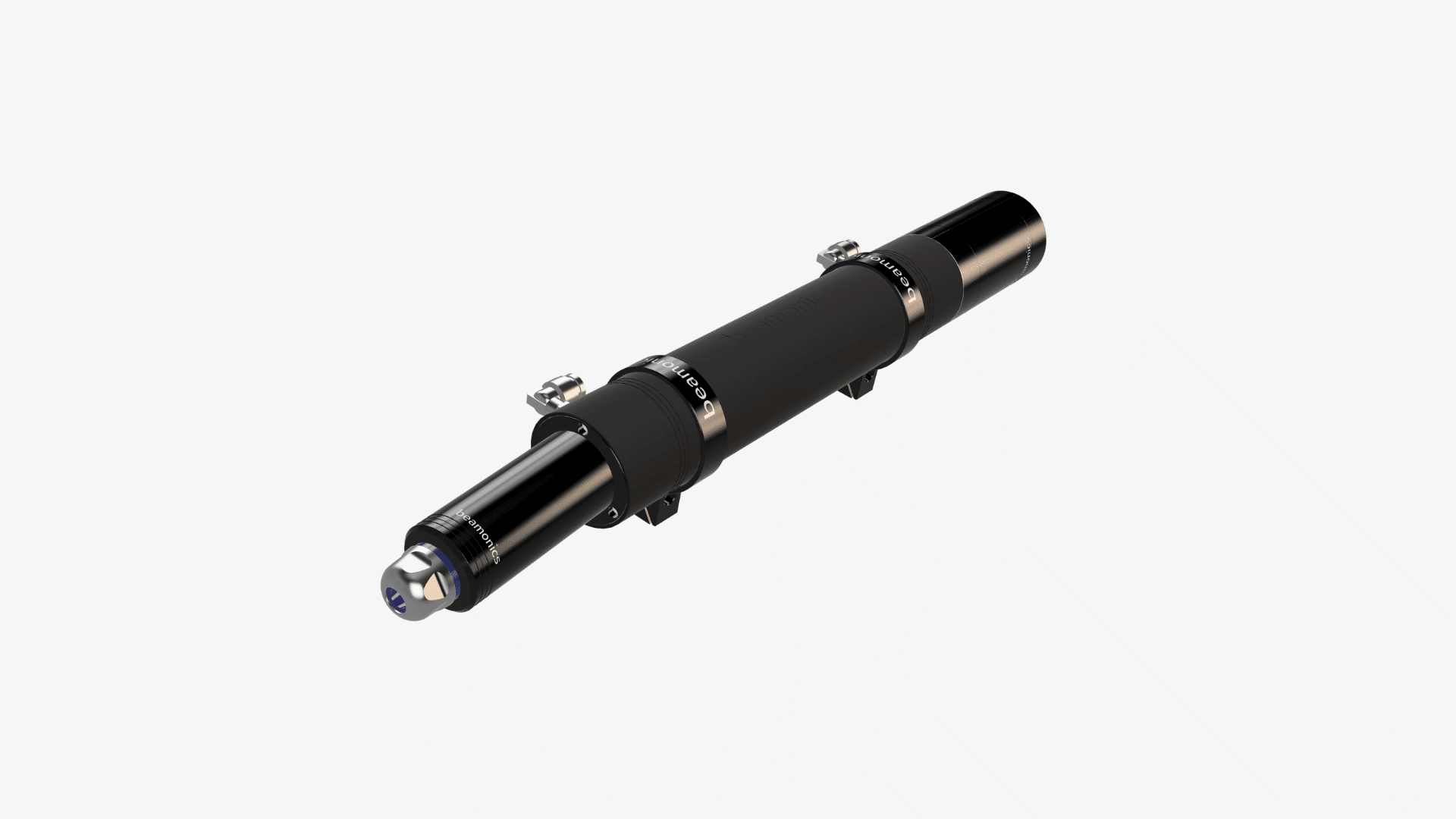
The BeamStack (BM-H-3) provides O₂ precision of 6 ppm and CO precision of 0.2 ppm at a 1 m path length with 1 s averaging (BM-H-3 TDS R1.7.1). At 10 Hz or 100 Hz analysis rates, precision scales with the square root of the averaging time: a 10× faster update rate produces roughly 3× higher noise per reading. Whether this trade-off is acceptable depends on the control loop bandwidth and the magnitude of the concentration changes being tracked.
Leak detection and fugitive emissions
In leak surveys, the operator walks or drives along a pipeline, fence line, or equipment row, looking for elevated gas concentrations above background. The spatial resolution of the survey depends on how quickly the instrument responds relative to the operator’s movement speed. An instrument that updates once per second at walking speed captures concentration variations every metre or so. An instrument that updates every 30 seconds blurs the spatial information across tens of metres, making it difficult to localise the source.
The BeamSight (BM-V-2) detects CH₄ at 15 ppm·m and H₂S at 25 ppm·m precision at 10 m range with 0.5 s averaging (BM-V-2 TDS R1.2.1). Its sub-second response supports scanning surveys where the instrument is swept across a surface or along a pipeline, with concentration changes appearing in the data stream as they occur rather than being averaged away.
Process upsets and transient events
Chemical reactors, distillation columns, and batch processes can produce short-duration gas-phase excursions during startup, shutdown, feed changes, or abnormal conditions. If the excursion lasts seconds and the analyzer responds in minutes, the event is either missed entirely or captured as a small bump in a time-averaged trend. For safety monitoring (detecting an H₂S release during a vessel opening, for example) or for process forensics (understanding what happened during a batch deviation), the ability to capture transient events at their actual timescale is important.
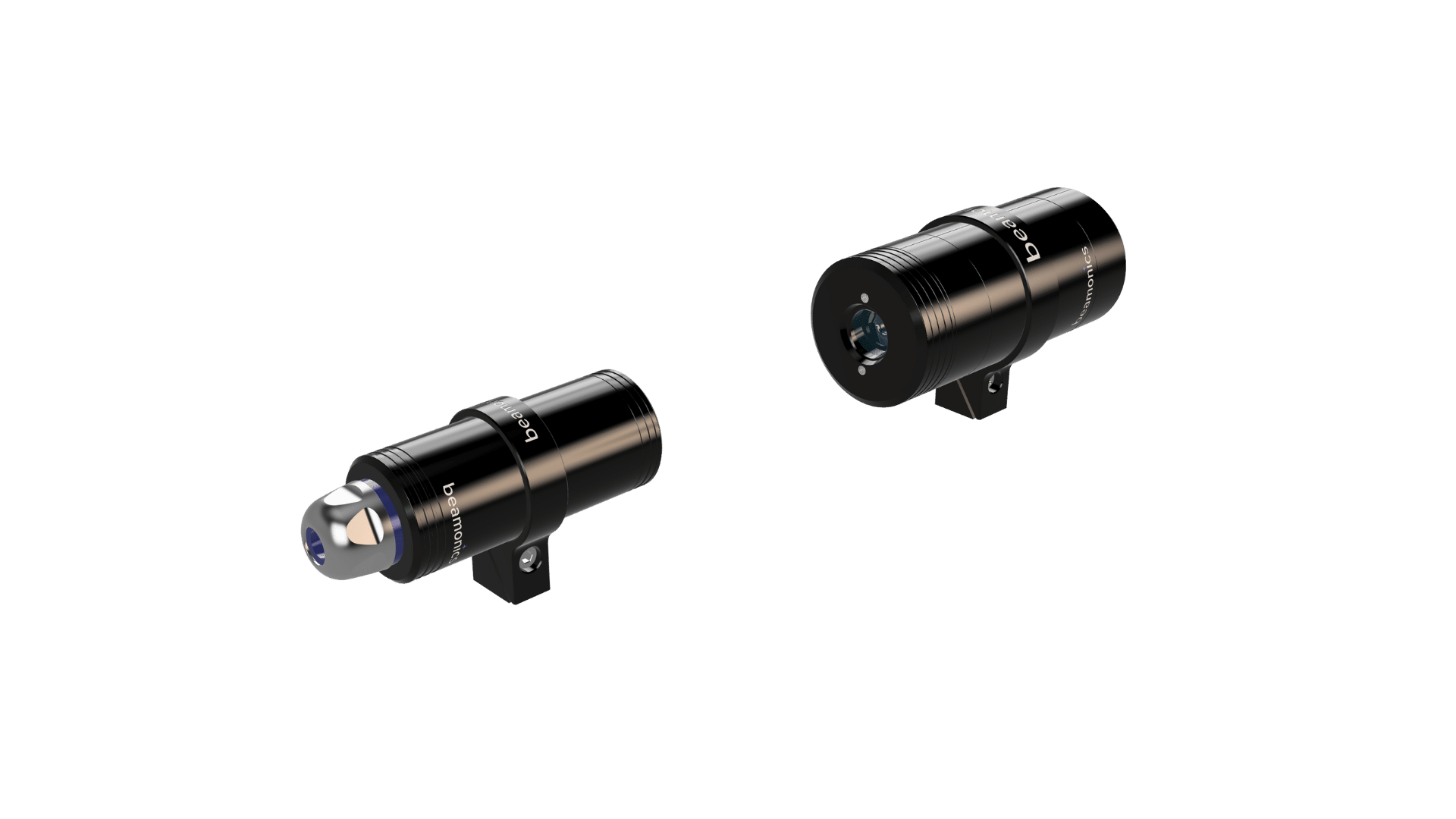
The BeamCell (BM-H-3) delivers H₂S precision of 1.5 ppm with 1 s averaging at the 0.2 m cell path length (BM-H-3-BC TDS R1.6.1). For transient detection, the analysis rate can be increased to 10 Hz or higher at the cost of proportionally higher noise per reading, allowing short-duration events to be resolved in the data record.
Turbulent and dynamic flows
In research and industrial applications involving turbulent gas mixing, stratified flows, or rapid chemical kinetics, the gas composition at a given point can fluctuate on millisecond timescales. Standard gas analyzers operating at 1 Hz or slower measure only the time-averaged concentration and cannot capture the dynamics. The BeamStack’s 10 kHz maximum analysis rate enables measurement of turbulent concentration fluctuations, which is relevant in combustion research, mixing studies, and high-speed process characterisation.
This capability is niche rather than routine: most industrial process monitoring does not require kHz-rate data. But for applications that do, the difference between a 1 Hz analyzer and a 10 kHz analyzer is qualitative, not just quantitative, because the information content of the measurement changes.
Where speed is less important than other factors
For ambient air quality monitoring, regulatory emissions reporting, and environmental compliance, the relevant time resolution is typically minutes to hours. One-second updates are not harmful, but they are not the reason to select TDLAS over other techniques. In these applications, long-term stability (months to years without recalibration drift), selectivity (no cross-interference from water vapour, CO₂, or other matrix gases), and data integrity (continuous self-diagnostics and fault detection) are the primary selection criteria. TDLAS performs well on all three, but the value proposition is about reliability and data quality rather than speed.
For extractive measurement through long sample lines, the total system response time is dominated by the transport delay through the tubing, not by the analyzer speed. A TDLAS extractive analyzer with 1 ms spectroscopy response connected to a 20-metre sample line at a moderate flow rate will have a system-level response time of several seconds regardless of how fast the spectroscopy is. Reducing the spectroscopy response time below the transport delay yields no practical benefit. In these configurations, the advantage of TDLAS over slower techniques is more about stability and selectivity than about speed.
Specification context
| Parameter | BeamStack (BM-H-3) | BeamCell (BM-H-3) | BeamSight (BM-V-2) |
|---|---|---|---|
| Analysis rate | 1 Hz to 10 kHz | 1 Hz to 10 kHz | Configurable |
| Spectroscopy cycle | 100 µs minimum | 100 µs minimum | — |
| Startup time | ~5 s | ~5 s | — |
| Data interfaces | RS-485/422, USB, 4-20 mA, relay, expansion | RS-485/422, USB, 4-20 mA, relay, expansion | Mini USB, I²C, UART, GPIO |
Sources: BM-H-3 TDS R1.7.1, BM-H-3-BC TDS R1.6.1, BM-V-2 TDS R1.2.1.
Practical considerations
Faster analysis rates produce more data. A single BeamStack operating at 1 kHz generates 86.4 million readings per day per gas channel. The data pipeline, whether it feeds a PLC via 4-20 mA, a DCS via serial protocol, or a data historian via digital interface, must be designed to handle this throughput or to apply appropriate decimation and averaging at the instrument or gateway level. Configuring the analysis rate to match the application’s actual time resolution requirement avoids unnecessary data volume.
The precision-versus-speed trade-off follows a square-root law: halving the averaging time increases the noise per reading by a factor of roughly 1.4. For applications where both high speed and low noise are needed, the path length and optical configuration must provide sufficient baseline signal-to-noise to support the desired combination. The BeamStack’s longer path lengths (up to 30 m) provide more absorption signal per unit concentration than the BeamCell’s 0.2 m cell, which gives the in-situ configuration more headroom for high-speed, low-noise operation.
In-situ measurement (BeamStack) delivers the analyzer’s native speed directly to the process. Extractive measurement (BeamCell) interposes a sample transport delay that may negate the speed advantage for fast-response applications. The configuration choice should account for whether the application actually requires process-level response time or whether the measurement is for trending and compliance at longer time constants.
Closing remark
Speed in gas analysis is a means to an end, not an end in itself. A fast measurement is valuable when the process changes fast, when the operator needs spatial resolution during a survey, or when transient events must be captured for safety or forensic purposes. In other applications, the same TDLAS platform delivers its value through stability, selectivity, and low maintenance rather than through speed. Configuring the instrument for the actual measurement requirement, rather than running at maximum rate by default, produces better data with less noise and more manageable data volumes.
Related links
- BeamStack (BM-H-3) product page
- BeamCell (BM-H-3) product page
- BeamSight (BM-V-2) product page
- O₂ monitoring for combustion control using TDLAS
- TDLAS for leak detection and fugitive emissions