In Brief
Water and wastewater treatment facilities produce and consume several gases that require continuous monitoring: methane in anaerobic digesters, hydrogen sulphide in sewer networks and sludge handling, oxygen in aeration basins, and carbon dioxide as an indicator of biological activity. TDLAS provides fast, selective measurement of these species without the drift, cross-sensitivity, and consumable replacement cycles that limit electrochemical and catalytic sensors in the wet, corrosive, and biologically active environments typical of treatment plants.
Background
Gas monitoring in water treatment serves three distinct purposes, each with its own measurement requirements.
Process control requires continuous, real-time concentration data fed to automation systems. In aeration basins, dissolved oxygen is controlled by adjusting blower speed or diffuser output, but the headspace gas composition provides a complementary check on whether the biological process is performing as expected. In anaerobic digesters, the methane-to-CO₂ ratio in the biogas indicates digester health, and deviations signal process upsets that can reduce gas yield or destabilise the biology.
Safety monitoring addresses the hazards inherent in enclosed and below-grade structures. Wastewater infrastructure contains confined spaces, wet wells, pump stations, digesters, and covered tanks where oxygen depletion, methane accumulation, and hydrogen sulphide exposure are documented causes of worker fatalities. H₂S is acutely toxic at concentrations above 100 ppm and detectable by smell only at low concentrations; at higher levels it paralyses the olfactory nerve, removing the warning signal.
Compliance monitoring supports reporting obligations under environmental permits. Biogas flaring efficiency, fugitive methane emissions from uncovered digesters or sludge storage, and odour-related H₂S emissions at the plant boundary may all require quantified measurement data.
Conventional monitoring in these applications relies heavily on electrochemical sensors for toxic gases (H₂S, CO) and catalytic bead sensors for combustible gases (CH₄). These technologies are well-established but share a common vulnerability in the wastewater environment: the combination of high humidity, condensation, corrosive gases (H₂S, NH₃), and biological fouling degrades sensor elements faster than in cleaner industrial settings. Calibration intervals shorten, sensor replacement frequency increases, and the risk of undetected measurement drift rises.
TDLAS measurement principle in wet, corrosive atmospheres
Tunable diode laser absorption spectroscopy (TDLAS) measures gas concentration by scanning a narrow-band laser across a molecular absorption line specific to the target species. The measurement is optical: the laser beam passes through the gas, and the attenuation at the absorption wavelength yields concentration via the Beer-Lambert relation. No chemical reaction occurs, no electrolyte is consumed, and no heated catalytic element is exposed to the gas.
This operating principle provides two advantages directly relevant to the wastewater environment. The measurement does not degrade in the presence of H₂S, NH₃, moisture, or biological aerosols, because the laser and detector are not chemically reactive. And the inherent selectivity of molecular absorption means each gas is measured at its own spectral line without cross-interference from other species present in the same atmosphere, a practical benefit in digester biogas where CH₄, CO₂, H₂S, and water vapour coexist at high concentrations.
Methane monitoring in anaerobic digesters
Anaerobic digestion produces biogas that is typically 55% to 70% CH₄ and 30% to 45% CO₂ by volume, with trace quantities of H₂S, NH₃, and water vapour. Monitoring the CH₄ concentration and the CH₄:CO₂ ratio provides direct feedback on digester performance. A falling methane fraction can indicate organic overload, pH imbalance, or inhibition of methanogenic bacteria.
For biogas composition monitoring, the BeamCell (BM-H-3) is the natural configuration. Gas is extracted from the digester headspace or biogas line and passed through the measurement cell. The controlled cell environment avoids the complications of measuring directly inside or across a digester, where condensation, foam carryover, and access constraints are common. CH₄ precision is 1 ppm and CO₂ precision is 2.5 ppm at the 0.2 m cell path length under standard test conditions (1 s averaging, 1 atm, 300 K), per the BM-H-3-BC datasheet (TDS R1.6.1). These precision values are far finer than the percent-level changes that indicate process upset, providing substantial measurement headroom.
The BeamCell’s multi-point sampling capability is relevant at larger treatment works with multiple digesters. A single analyzer connected to a valve manifold can cycle through gas samples from several digesters in sequence, with each measurement completing within seconds. This reduces the number of instruments required while still providing near-continuous data from each digester.
The flow chamber’s acid-resistant construction tolerates the H₂S present in raw biogas, which would poison catalytic bead sensors and shorten the life of electrochemical cells.
Hydrogen sulphide detection in sewer networks and sludge handling
H₂S is generated by sulphate-reducing bacteria in anaerobic conditions, which are prevalent in gravity sewers, force mains, pump station wet wells, and sludge storage. The gas is corrosive to concrete and metal infrastructure (biogenic sulphuric acid attack is a major cause of sewer deterioration), toxic to workers at low ppm concentrations, and a primary source of odour complaints from surrounding communities.
Monitoring H₂S in these environments requires a sensor that tolerates high humidity (often near saturation), resists the corrosive atmosphere, and provides reliable readings without frequent recalibration. Electrochemical H₂S sensors function in these conditions but have limited lifespans and are susceptible to poisoning by other reduced sulphur compounds.
The BeamCell provides H₂S precision of 1.5 ppm at 0.2 m path length under standard test conditions (BM-H-3-BC TDS R1.6.1). For extractive monitoring from sewer headspace or wet well ventilation, the sample is drawn through tubing to the analyzer, which can be located in a dry, accessible position outside the confined space.
For area monitoring over open structures such as sludge drying beds, settling tanks, or headworks, the BeamSight (BM-V-2) provides remote detection at distances up to 30 m without physical contact with the gas. H₂S detection precision is 25 ppm·m at 10 m range and 0.5 s averaging (BM-V-2 TDS R1.2.1). The ppm·m measurement quantifies the total H₂S burden along the beam path, which is useful for identifying emission hotspots and for fence-line odour management, though converting to a point concentration requires assumptions about the gas plume geometry.
Oxygen monitoring in aeration and process control
Aerobic biological treatment depends on maintaining adequate dissolved oxygen for microbial activity. While dissolved oxygen probes in the water phase provide the primary control signal, headspace O₂ monitoring in covered aeration basins, enclosed bioreactors, or ventilation exhausts provides a secondary check and a safety function: confirming that the atmosphere above the water surface remains safe for personnel access.
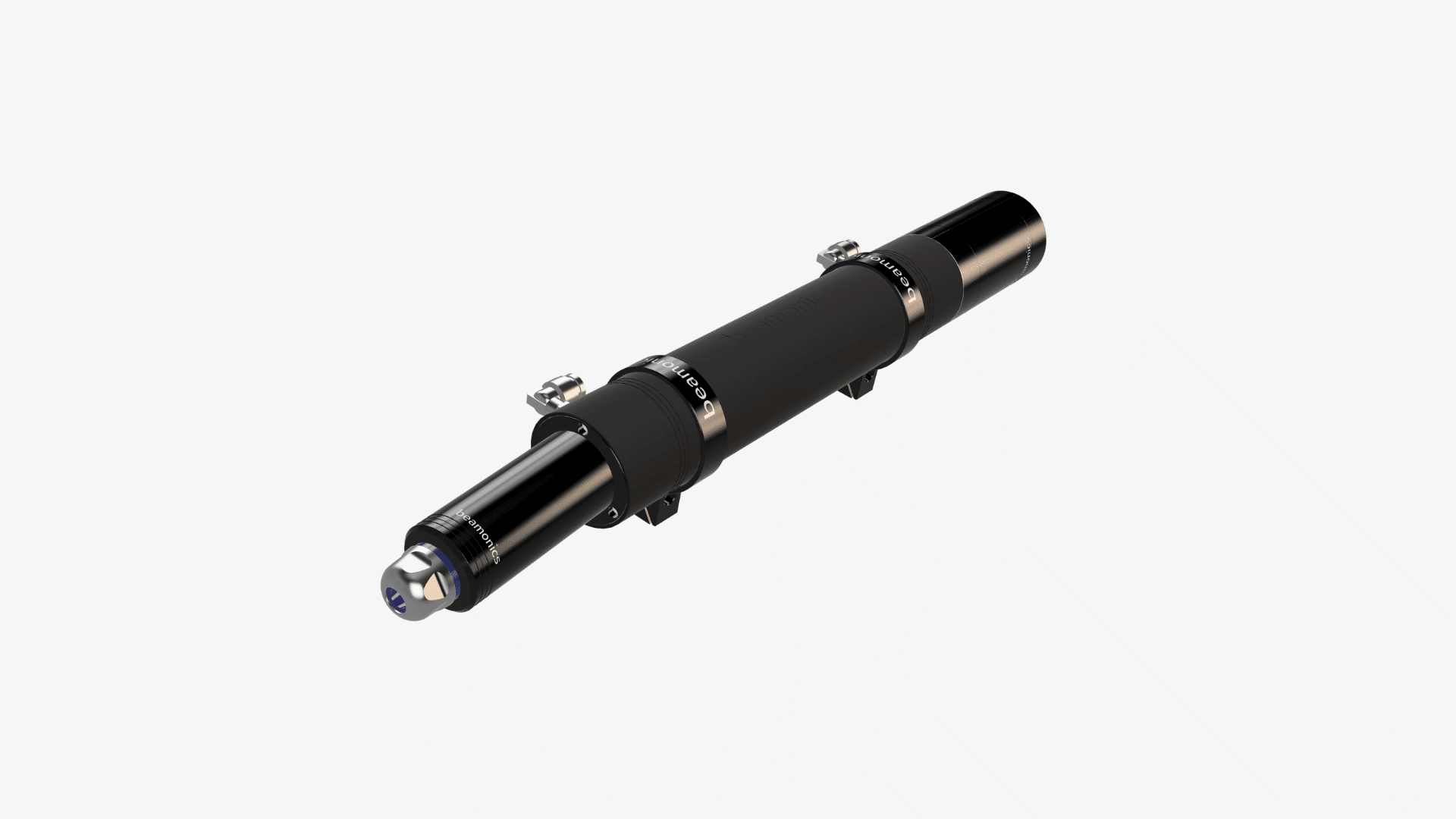
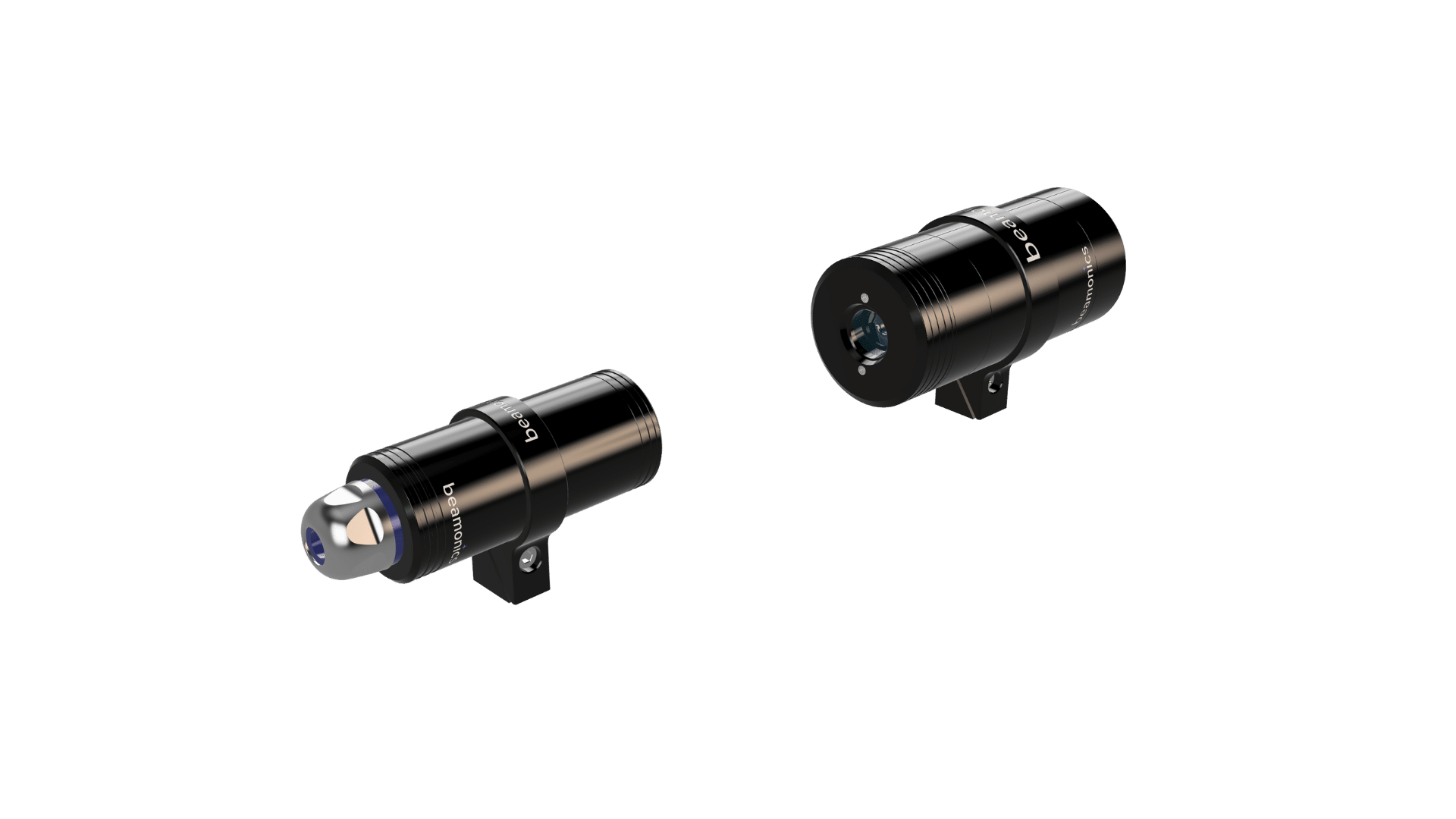
The BeamStack (BM-H-3) can measure O₂ across a ventilation duct or basin headspace in situ, with a precision of 6 ppm at 1 m path length (BM-H-3 TDS R1.7.1). For extractive monitoring from enclosed headspaces, the BeamCell provides O₂ precision of 30 ppm at 0.2 m (BM-H-3-BC TDS R1.6.1). Both values are far below the percent-level thresholds relevant to safety (19.5% lower limit, 23.5% upper limit) and process control.
Specification summary for common wastewater gases
| Gas | BeamStack (ppm, 1 m) | BeamCell (ppm, 0.2 m) | BeamSight (ppm·m, 10 m) |
|---|---|---|---|
| CH₄ | 0.2 | 1 | 15 |
| CO₂ | 0.5 | 2.5 | 40 |
| H₂S | 0.3 | 1.5 | 25 |
| NH₃ | 0.2 | 1 | 15 |
| O₂ | 6 | 30 | — |
| H₂O | 0.2 | 1 | — |
Standard test conditions: t = 1 s (BeamStack, BeamCell) or 0.5 s (BeamSight), P = 1 atm, T = 300 K. Precision is the largest of 1% relative and the specified value. Sources: BM-H-3 TDS R1.7.1, BM-H-3-BC TDS R1.6.1, BM-V-2 TDS R1.2.1.
Practical considerations
Wastewater environments are exceptionally hard on gas sensing equipment. High humidity, condensation cycling, H₂S-induced corrosion, and biological fouling all accelerate sensor degradation. The primary advantage of TDLAS in this context is that the measurement is optical rather than chemical: the sensing element does not contact the gas in a reactive sense and does not consume itself during measurement. This translates directly to longer service intervals and more stable readings compared to electrochemical and catalytic alternatives.
For cross-stack or open-path BeamStack installations over covered tanks or in ventilation ducts, the optical windows will accumulate moisture and biological deposits. Purge air and heated windows are standard mitigation. The cleaning interval depends on the specific environment but should be assessed during commissioning and adjusted based on signal-level diagnostics.
For extractive BeamCell measurements, the sample tubing must be managed to prevent condensation blockage. In biogas applications with high moisture content, a condensation trap or cooler upstream of the measurement cell is advisable. The flow chamber itself tolerates the corrosive species present in wastewater off-gas, but the sample transport path needs attention.
The BeamSight’s IP44 rating is adequate for sheltered outdoor installations but may require additional weather protection at exposed sites. For drone-mounted surveys of large treatment works, the 5-hour battery life of the portable version is sufficient for a survey session, but the 0.7 to 1.0 kg weight must be accounted for in the drone’s payload budget.
Electrochemical H₂S and O₂ sensors remain appropriate for personal gas monitors carried by workers entering confined spaces. TDLAS serves a different role: fixed or semi-permanent area and process monitoring, providing continuous data to control and safety systems. The two approaches are complementary rather than competing.
Closing remark
Water and wastewater treatment will face increasing pressure to quantify fugitive greenhouse gas emissions (CH₄, N₂O) alongside the existing requirements for process control and worker safety. Measurement infrastructure installed now for operational purposes can serve double duty for emissions reporting if the analyzer technology provides the stability, selectivity, and data-logging capability that compliance frameworks require. Building that capability into the monitoring architecture from the start avoids the cost of retrofitting it later.
Related links
- BeamCell (BM-H-3) product page
- BeamStack (BM-H-3) product page
- BeamSight (BM-V-2) product page
- Ammonia monitoring in wastewater treatment
- TDLAS vs. electrochemical cells and catalytic bead sensors
- Biogas composition monitoring with TDLAS