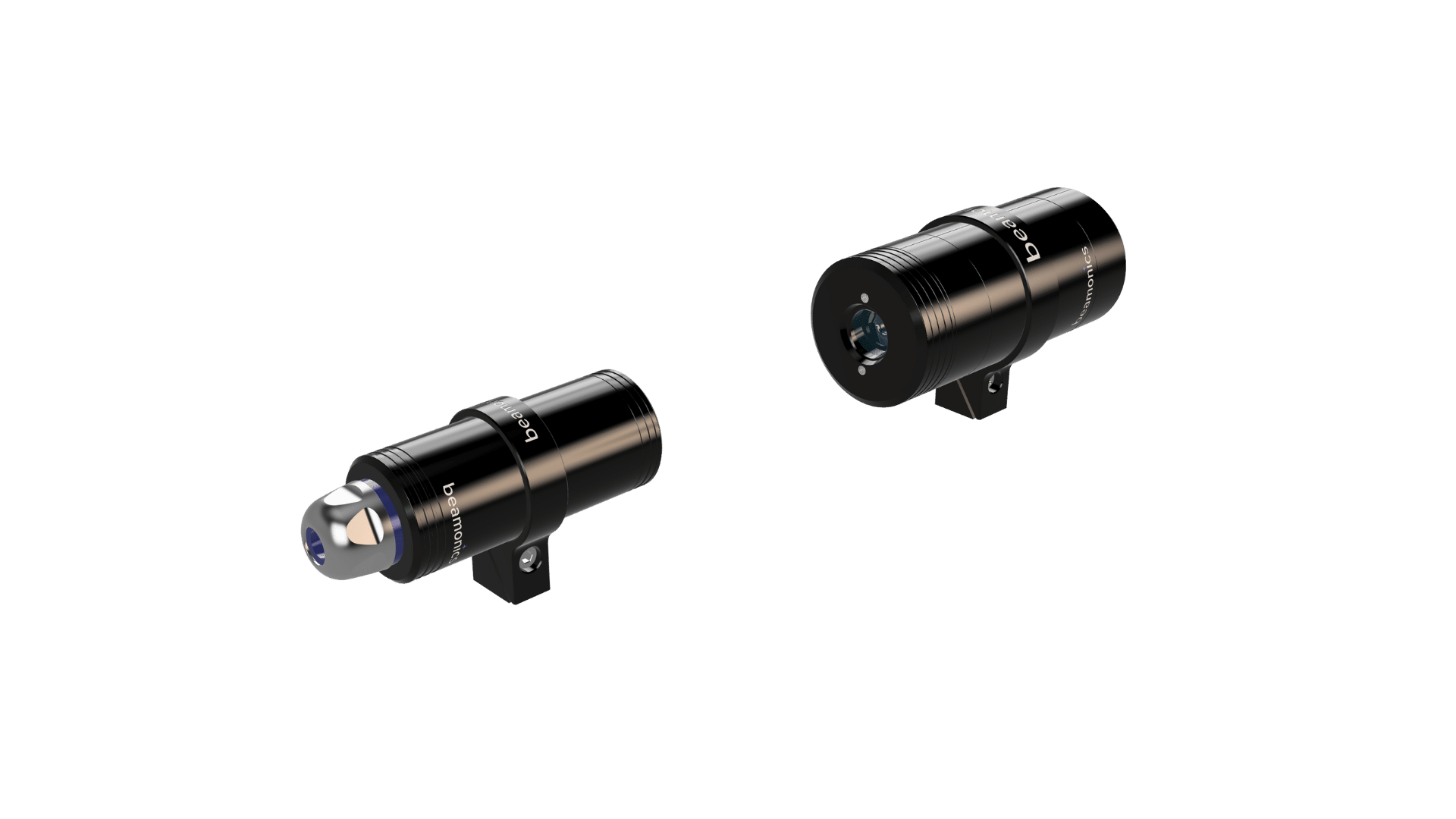
In Brief
Oxygen concentration is a critical control parameter in chemical manufacturing, where it determines whether reactions proceed as intended, whether inert atmospheres are genuinely safe, and whether oxidation-sensitive products retain their quality. The measurement requirements span from percent-level O₂ in combustion and reactor headspace monitoring down to tens of ppm for verifying inert gas blankets and purge effectiveness. Beamonics TDLAS measures O₂ by targeting its near-infrared absorption band near 760 nm, providing a selective, drift-free reading that is unaffected by the background gas composition. This addresses a specific limitation of conventional O₂ sensors: the tendency to produce false readings in the presence of reducing gases, combustible vapors, or corrosive species that are common in chemical process environments.
Background
Chemical manufacturing relies on controlled atmospheres. Many reactions require either a precisely dosed O₂ supply (partial oxidation, catalytic oxidation, aerobic fermentation) or the near-complete exclusion of O₂ (polymerization under inert blanket, metal-organic synthesis, handling of pyrophoric materials). In both cases, the O₂ concentration must be known continuously, with enough accuracy and speed to support process control decisions and safety interlocking.
The consequences of incorrect O₂ measurement vary by application but are consistently costly. In a reactor running a partial oxidation, excess O₂ drives the reaction past the desired intermediate product toward full combustion products, destroying yield. Insufficient O₂ leaves substrate unconverted, wasting feedstock and reactor time. In an inerted vessel where flammable solvents are handled, an O₂ reading that drifts high by 0.5 vol% without detection may bring the headspace above the limiting oxygen concentration (LOC), the threshold below which ignition cannot occur. In pharmaceutical manufacturing, trace O₂ in a nitrogen-blanketed reactor can oxidize an active ingredient, creating an impurity that requires additional purification or causes a batch rejection.
The conventional technologies for industrial O₂ measurement are paramagnetic analyzers, zirconia-cell probes, and electrochemical cells. Each has characteristics that limit its suitability in chemical process environments.
Paramagnetic analyzers exploit oxygen’s unusually strong magnetic susceptibility. They are accurate and selective but require extractive sampling with clean, dry, particle-free gas. The sample conditioning system adds transport delay, maintenance burden, and potential for sample alteration. Paramagnetic sensors are also sensitive to vibration, which limits their placement in process areas with rotating equipment.
Zirconia-cell probes operate at 600 to 700 °C and generate an electrochemical potential proportional to the O₂ partial pressure difference between the sample and a reference atmosphere. They are robust for in-situ measurement in hot combustion gases but have two limitations in chemical process applications. The response becomes increasingly nonlinear below approximately 0.1 vol% (1000 ppm), reducing accuracy in the low-O₂ range where inerting verification occurs. And reducing gases such as CO, H₂, and hydrocarbons react on the hot zirconia surface, consuming O₂ at the sensor and producing a reading lower than the actual concentration in the gas stream. In a chemical reactor headspace containing solvent vapors, this means the zirconia probe can report safe O₂ levels when the actual concentration is above the safety threshold.
Electrochemical O₂ cells are compact and inexpensive but drift as the electrolyte ages, typically requiring replacement every 1 to 2 years. They are also susceptible to interference from reducing gases and acid vapors, both of which are common in chemical process environments. Response times of 15 to 60 seconds limit their usefulness for dynamic process control.
How Beamonics TDLAS measures oxygen in chemical processes
Oxygen absorbs light in the near-infrared A-band around 760 nm. These absorption lines are weaker than the strong mid-infrared features used for gases like CO, CO₂, and CH₄, but they are well separated spectrally from the absorption features of other common industrial gases. A tunable diode laser is scanned across one of these O₂ lines, the attenuation is measured, and O₂ concentration is computed from the absorption line shape using the Beer-Lambert law and known molecular parameters.
Careful line selection is an inherent part of the Beamonics design process, and the analyzers as such offer little to no cross-interference. Water vapor, nitrogen, argon, CO₂, hydrocarbons, and solvent vapors do not absorb at the O₂ measurement wavelength and do not affect the reading. This is the central advantage over zirconia and electrochemical sensors in chemical process gas streams where multiple species are present.
The measurement is also self-referencing. Each laser wavelength sweep covers both the O₂ absorption feature and adjacent non-absorbing regions, establishing the baseline within every measurement cycle. There is no chemical reaction, no consumable electrolyte, and no heated ceramic element. The O₂ reading does not drift with sensor age, and it is not biased by reducing gases in the sample.
Beamonics BeamStack achieves O₂ analysis precision of 6 ppm at a 1 m path length under standard test conditions (1 s averaging, 1 atm, 300 K). BeamCell achieves 30 ppm at a 0.185 m path length under the same conditions. Both instruments support analysis rates from 1 Hz to 10 kHz, providing real-time response to O₂ concentration changes.
These precision values define where Beamonics TDLAS fits within the spectrum of chemical process O₂ measurement needs. Applications requiring O₂ resolution in the tens-of-ppm range and above are well within the capability of standard instrument configurations. Applications requiring sub-ppm O₂ measurement, such as ultra-high-purity gas verification in semiconductor fabrication or certain pharmaceutical lyophilization processes, exceed what standard path lengths provide and are better served by dedicated trace O₂ analyzers unless extended path lengths or longer averaging times bring the effective detection limit into range.
Applications in chemical manufacturing
Inerting verification and explosion prevention
Many chemical processes handle flammable solvents, combustible powders, or reactive intermediates under nitrogen or argon blanket. Maintaining the headspace below the limiting oxygen concentration is a safety-critical requirement. LOC values vary by material but commonly fall in the range of 8 to 12 vol% for organic solvents and 5 to 8 vol% for finely divided metal powders. Operating practice typically targets O₂ well below the LOC, with alarm setpoints at 50 to 75% of the LOC value.
For an LOC of 10 vol% with an alarm at 5 vol% (50,000 ppm), BeamStack’s 6 ppm precision provides enormous measurement margin. The practical benefit in this role is not the absolute detection limit but the absence of drift and the immunity to false readings from solvent vapors. A zirconia probe in a headspace containing toluene vapor will under-read O₂ because the toluene oxidizes on the hot sensor surface, potentially masking an air leak. Beamonics TDLAS reads the actual O₂ concentration regardless of what else is in the gas.
For tighter inerting requirements, such as maintaining O₂ below 0.1 vol% (1000 ppm) during handling of pyrophoric materials or moisture-sensitive organometallics, the 6 ppm precision at 1 m still provides comfortable resolution. At 0.01 vol% (100 ppm), the measurement remains well within capability. Below this level, the achievable precision depends on the optical path length available and the acceptable averaging time. At Beamonics, we are experts on picking the path length for your specific measurement case. Please get in touch below.
Cross-stack BeamStack installations across reactor vent lines or headspace measurement ports provide in-situ O₂ data without extracting a sample. This eliminates the risk of air ingress through leaky sample lines, which is a real problem in inerting applications where the O₂ concentration being verified is very low, and where any leak in the sampling system adds O₂ that makes the reading artificially high.
Oxidation reaction control
Selective oxidation reactions, such as the production of ethylene oxide from ethylene, the oxidation of o-xylene to phthalic anhydride, or the partial oxidation of methanol to formaldehyde, require precise O₂ dosing. Too little oxygen leaves substrate unconverted; too much drives the reaction past the desired product to CO₂ and H₂O, destroying selectivity and yield.
In these processes, O₂ concentration in the reactor feed or reactor headspace is a control variable that directly affects product yield and selectivity. The relevant concentration range is typically 1 to 10 vol%, where BeamStack precision of 6 ppm provides resolution far finer than the process requires. The more relevant advantage is response speed: analysis rates up to 10 kHz mean the O₂ reading tracks changes in feed composition or dosing rate within milliseconds, allowing the control system to maintain tight setpoint control during load changes or feed disturbances.
In an ethylene oxide reactor, the gas mixture includes ethylene, ethylene oxide, CO₂, H₂O, and N₂ in addition to O₂. An in-situ BeamStack across the reactor outlet duct provides the O₂ reading without sample extraction, without delay, and without interference from the other species present.
Fermentation and bioprocess atmosphere control
Aerobic fermentation processes in pharmaceutical and biotechnology manufacturing require dissolved oxygen control, achieved by managing the O₂ concentration in the sparge gas and the headspace above the broth. The O₂ in the off-gas indicates how much oxygen the culture is consuming and is used to calculate the oxygen uptake rate (OUR), a key parameter for monitoring culture health and metabolic state.
Off-gas O₂ measurement is typically in the range of 15 to 20.9 vol%, tracking the depletion of oxygen from the inlet air. The required resolution is on the order of 0.1 vol% (1000 ppm). Beamonics TDLAS provides this comfortably and adds the advantage that the measurement is unaffected by CO₂, ethanol, volatile metabolites, and water vapor, all of which are present in fermenter off-gas and can interfere with electrochemical O₂ sensors.
For anaerobic processes that require strict O₂ exclusion (anaerobic fermentation, certain enzyme production), the measurement challenge shifts to verifying that O₂ is below a threshold, typically a few hundred to a few thousand ppm. TDLAS covers this range without the drift problems that make electrochemical cells unreliable in long-duration batch processes lasting days or weeks.
Catalyst protection and regeneration
Many industrial catalysts are sensitive to oxygen. Reduced metal catalysts (nickel, copper, palladium) used in hydrogenation and other reduction reactions can be permanently damaged by exposure to O₂ above certain concentrations. During catalyst loading, activation, and shutdown, the reactor atmosphere must be monitored to verify that O₂ remains below the catalyst manufacturer’s specification, often in the range of 50 to 500 ppm.
During catalyst regeneration (controlled burn-off of coke deposits), O₂ is introduced at a controlled concentration, typically 0.5 to 2 vol%, and the temperature is monitored to prevent thermal damage. Precise O₂ measurement during regeneration prevents both under-regeneration (insufficient coke removal) and over-regeneration (thermal sintering of the catalyst).
BeamCell’s extractive configuration suits catalyst protection monitoring because the gas can be sampled from the reactor headspace or from the inert gas supply line via short tubing runs. The acid-resistant flow chamber tolerates the H₂S, CO, and hydrocarbon residues that may be present in reactor gas during shutdown and regeneration.
Specification comparison
| Parameter | BeamStack | BeamCell |
|---|---|---|
| O₂ precision | 6 ppm | 30 ppm |
| CO precision | 0.2 ppm | 1 ppm |
| CO₂ precision | 0.5 ppm | 2.5 ppm |
| CH₄ precision | 0.2 ppm | 1 ppm |
| H₂O precision | 0.2 ppm | 1 ppm |
| H₂S precision | 0.3 ppm | 1.5 ppm |
| NH₃ precision | 0.2 ppm | 1 ppm |
| Path length (test conditions) | 1 m | 0.185 m |
| Analysis rate | 1 Hz to 10 kHz | 1 Hz to 10 kHz |
| Operating temperature | −10 °C to 55 °C | −10 °C to 55 °C |
| IP classification | IP67 | IP67 |
| Supply voltage | 15 to 32 VDC | 15 to 32 VDC |
| Power consumption | 5 W | 5 W |
| Startup time | ~5 s | ~5 s |
All precision values under standard test conditions: P = 1 atm, T = 300 K, 1 s averaging. Largest of 1% relative and specified precision applies.
Practical Considerations
For cross-stack installations where the duct or reactor port allows a path length greater than 1 m, the effective O₂ precision improves accordingly, since the A-band absorption lines near 760 nm are weaker than the mid-infrared features used for CO, CO₂, and CH₄. When specifying the system, the available optical path length should be confirmed to ensure it meets the precision requirement for the application.
In inerting applications, the most important property of the O₂ analyzer is not its detection limit but its immunity to false low readings. A sensor that under-reports O₂ because reducing gases consume oxygen at the sensor element creates a false sense of security. Beamonics TDLAS does not consume or react with any gas in the sample, so the reading cannot be biased low by co-present species. This is a meaningful safety distinction from zirconia-cell sensors in atmospheres containing solvent vapors, H₂, or CO.
Sample line integrity is critical for low-O₂ measurement by extractive methods. Any leak in the tubing, fittings, or pump introduces atmospheric O₂ (20.9 vol%) that biases the reading high. For BeamCell installations monitoring O₂ at levels below 1000 ppm, leak-tight connections (compression fittings, welded joints, or VCR fittings) and leak testing during commissioning are standard practice. In-situ BeamStack installations eliminate this concern entirely since no sample is extracted.
Beamonics TDLAS can measure O₂ simultaneously with other process-relevant gases from the same cross-stack installation. In a reactor where both O₂ and CO are safety-relevant, or where O₂ and H₂O are both process-critical, a multi-gas BeamStack configuration provides both measurements from one installation point, reducing instrument count and maintenance.
For chemical processes operating under GMP or similar quality frameworks, the calibration-free property of Beamonics TDLAS simplifies validation documentation. The measurement is traceable to molecular absorption physics rather than to a reference gas cylinder, and the self-referencing design eliminates the periodic revalidation cycles that drift-prone sensors require. Verification against a known reference gas can still be performed at commissioning or during periodic reviews, but it serves as a functional check rather than a required recalibration.
Closing Remark
Oxygen monitoring in chemical manufacturing is not a single measurement problem with a single solution. The required concentration range, the background gas composition, the installation constraints, and the acceptable maintenance burden all vary by application. Beamonics TDLAS addresses the applications where conventional O₂ sensors are limited by drift, cross-interference from reducing gases, or sensitivity to the chemical environment: inerting verification in solvent-laden atmospheres, oxidation reaction control in multi-component gas streams, fermentation off-gas analysis in humid conditions, and catalyst protection during shutdown and regeneration. Where the measurement requirement calls for tens-of-ppm O₂ resolution in a process gas that contains species hostile to conventional sensors, Beamonics TDLAS provides a measurement that holds its accuracy without recalibration, in an instrument that also measures CO, CO₂, and other process-relevant gases on the same platform.