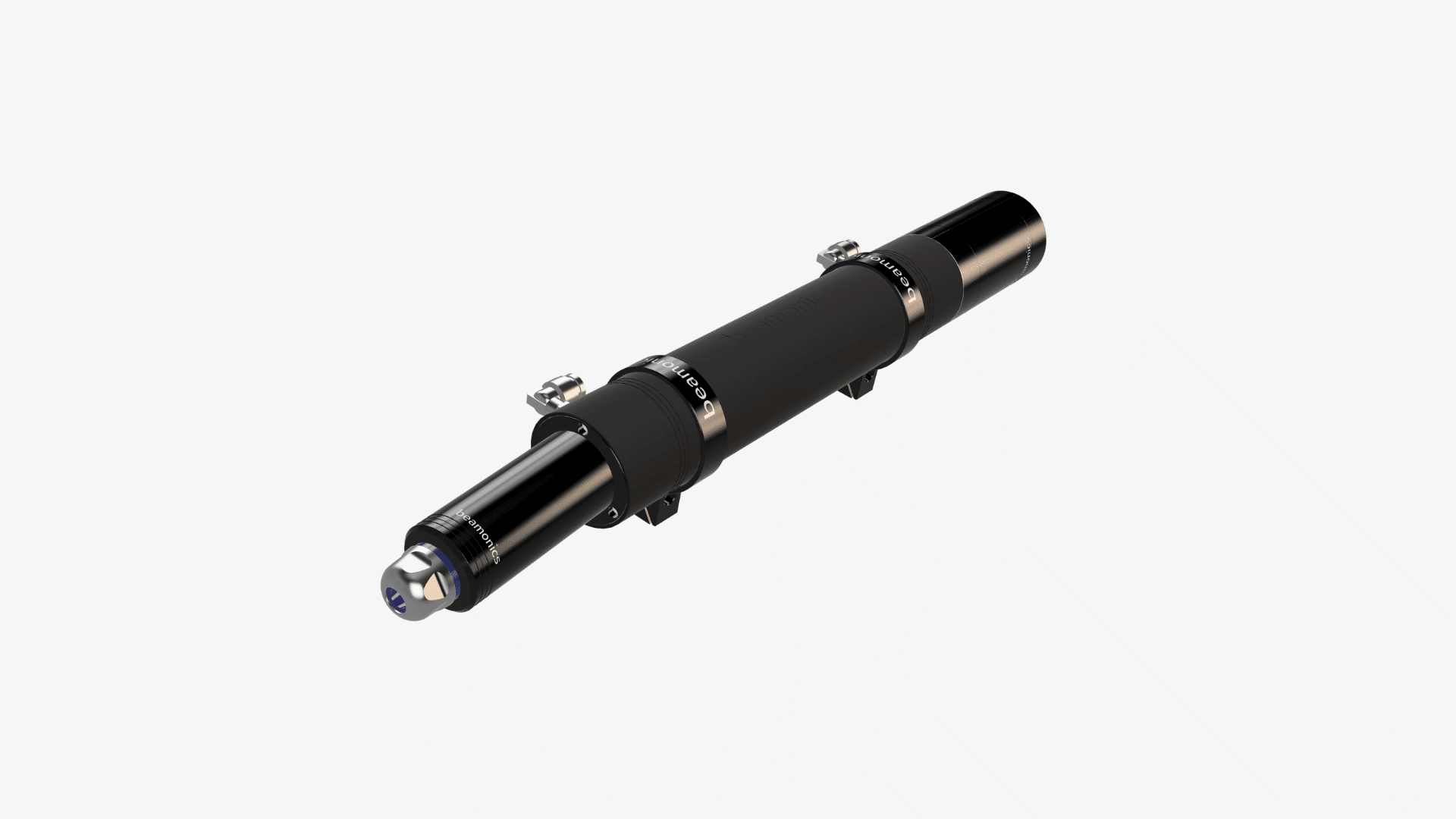
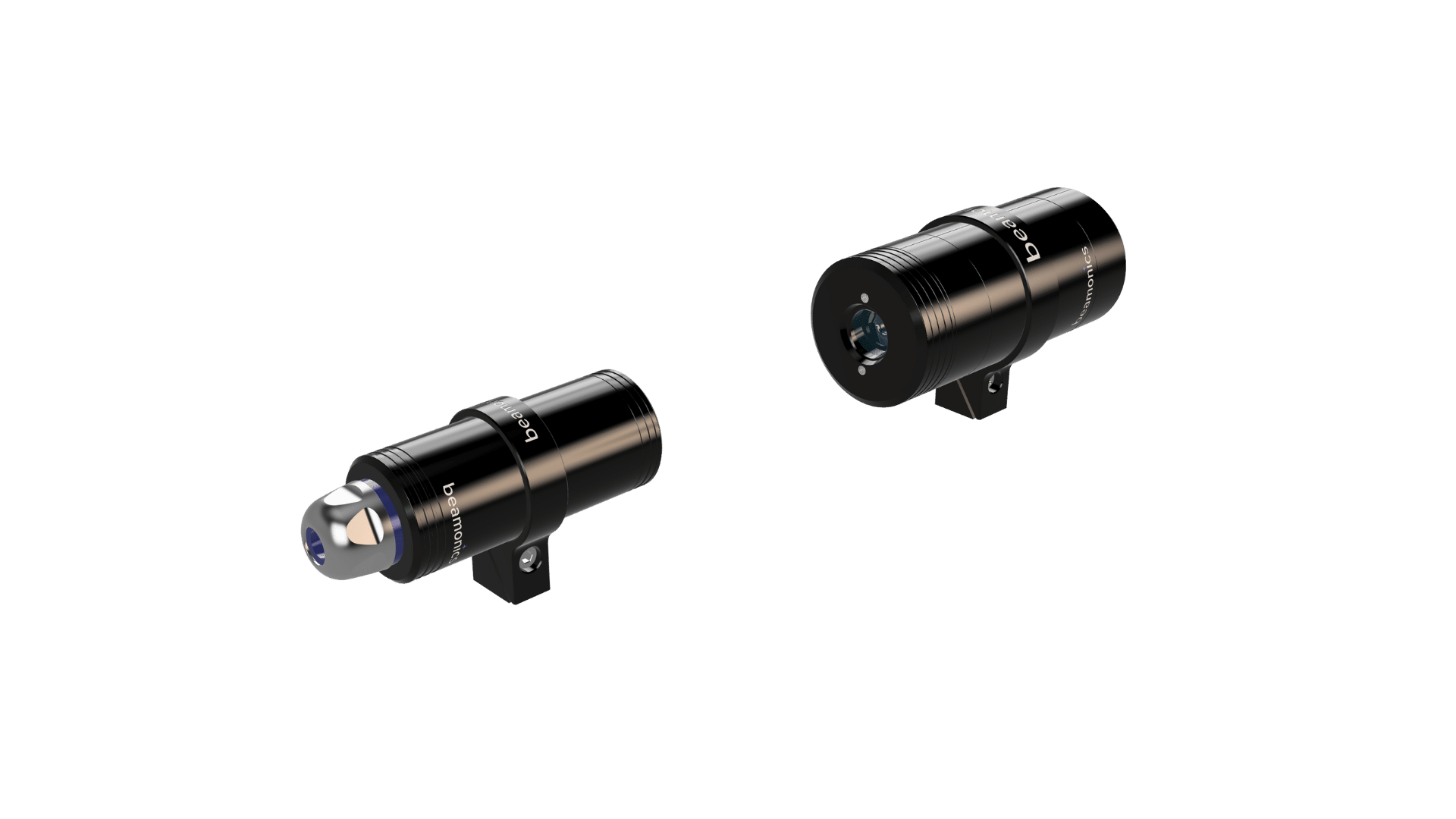
In Brief
Dust, fog, condensed droplets, and other particulate in the optical path attenuate the TDLAS laser beam and reduce measurement performance. This is a real limitation. What Beamonics TDLAS offers is a degree of inherent resilience through its spectral fitting approach, which separates broadband attenuation from the gas-specific absorption signal, and a proprietary platform that allows processes to run uninterrupted even under heavy transmission losses. Understanding how attenuation affects the measurement is essential for specifying TDLAS in the dusty, wet, or particle-laden environments common in heavy industry.
Background
Many of the industrial environments where gas analysis is most needed are also environments with poor optical transmission. Coal-fired boiler ducts carry fly ash at loadings of grams per cubic metre. Cement kiln exhausts contain calcium oxide and calcium carbonate particles. Waste incinerator flue gases combine particulate with high moisture and acid-gas condensation. Mining ventilation shafts carry rock dust. Biogas from anaerobic digesters is saturated with water vapour.
Any optical measurement technique, TDLAS included, is affected by these conditions. Particles and droplets in the beam path scatter and absorb laser light, reducing the intensity that reaches the detector. This reduction is broadband: it attenuates all wavelengths approximately equally, unlike the narrow, wavelength-specific absorption caused by the target gas molecule. The distinction between broadband attenuation and gas-specific absorption is the basis for the resilience that Beamonics TDLAS provides. At some extreme point, the transmitted signal drops below the noise floor and the measurement fails. The question for the engineer designing an installation is not whether attenuation will affect the measurement, but how much attenuation the system can tolerate.
How attenuation affects a Beamonics TDLAS measurement
In a Beamonics TDLAS analyzer, the raw measurement is the shape and depth of the absorption feature in the transmitted laser signal, not the absolute intensity of the transmitted light. The spectral fitting algorithm models the absorption line shape (a Voigt profile accounting for pressure and temperature broadening) and fits it to the measured data. Broadband attenuation, the kind caused by dust scattering, reduces the overall signal amplitude but does not change the shape of the absorption feature. The fitting algorithm can still extract the correct gas concentration from a weaker signal, as long as the signal remains above the noise floor.
This is a genuine advantage over NDIR instruments, where the measurement is based on the difference in total transmitted intensity between a measurement wavelength band and a reference band. In NDIR, broadband attenuation reduces the signal in both bands and can mimic gas absorption, creating a false positive. Beamonics TDLAS’s spectral fitting approach is less susceptible to this error mode because it uses the shape of the feature, not just its depth, to identify the gas.
As the transmitted signal decreases, the signal-to-noise ratio degrades and precision worsens. Beamonics instruments monitor received optical power continuously and flag low-signal conditions as a diagnostic fault, preventing the output of unreliable concentration data. The low-light limit for BeamStack and BeamCell is specified as 1 nW at 10 s integration. Beamonics instruments can handle transmission down to very low levels thanks to the proprietary platform, allowing processes to run uninterrupted without regular cleaning and re-calibration.
Sources of optical attenuation in industrial environments
Dust and particulate. Solid particles in the beam path scatter and absorb laser light. The attenuation depends on particle concentration, particle size relative to the laser wavelength, and path length. Total attenuation is the product of the extinction coefficient and the path length, which is why path length selection must account for the expected dust loading alongside the desired gas sensitivity. At Beamonics, we are experts on picking the path length for your specific measurement case. Please get in touch below.
Moisture, fog, and condensation. Water droplets in the beam path scatter light strongly. In open-path or cross-stack configurations through saturated atmospheres, fog can reduce transmission significantly over even moderate distances. Condensation on optical windows is a distinct problem: a thin water film produces persistent blockage that creates a more concentrated attenuation source than the same water distributed through the beam path.
Chemical deposits. In some environments, chemical species in the gas stream deposit on optical windows over time: calcium compounds in cement ducts, sulphate or chloride salts in acid-gas service, or biological films in wastewater applications. Beamonics instruments can handle transmission down to very low levels thanks to the proprietary platform, allowing processes to run uninterrupted without regular cleaning and re-calibration.
Extractive measurement as an alternative
The most complete solution to optical attenuation is to remove the gas from the process environment before measuring it. BeamCell draws gas through a filter and into a compact flow chamber (0.185 m path) where the optical conditions are controlled. Particulate is excluded by the filter. Moisture can be managed with a condensation trap or heated lines upstream of the cell. The optical windows remain clean in normal operation.
The trade-off is the addition of sample transport delay (seconds, depending on line length and flow rate), the maintenance of the sample conditioning path, and the loss of path-averaged spatial information. For severely dusty or wet processes where cross-stack measurement is impractical, extractive TDLAS via BeamCell often delivers more reliable continuous data than an in-situ installation operating under challenging optical conditions.
Application notes
In cement and mineral processing, CO and O₂ monitoring for kiln combustion control is the typical application. BeamStack with an appropriate path length provides CO precision of 0.2 ppm and O₂ precision of 6 ppm at 1 m under standard test conditions, well within the range needed for combustion feedback. For the dustiest sections of the process, extractive measurement via BeamCell may be more practical.
In coal and biomass combustion, fly ash loading varies with fuel type and measurement location relative to the particulate control equipment. Where possible, locating the TDLAS measurement point after the particulate collector simplifies the optical conditions. The instrument’s received-signal diagnostics provide ongoing confirmation that optical transmission remains adequate.
For biogas and wastewater applications, BeamCell with upstream filtration and condensation management typically provides a cleaner measurement environment than in-situ optics exposed to saturated vapour and potential biological fouling.
Specification context
| Parameter | BeamStack | BeamCell | BeamSight |
|---|---|---|---|
| Low-light limit | 1 nW (10 s) | 1 nW (10 s) | — |
| IP rating | IP67 | IP67 | IP44 |
| Optical path | Up to 30 m | 0.185 m | 0.2 to 100 m |
| Operating temperature | −10 °C to 55 °C | −10 °C to 55 °C | −10 °C to 50 °C |
Practical Considerations
The optical budget for a cross-stack installation should be estimated during the design phase. If the expected dust loading and path length produce an attenuation that leaves insufficient signal margin above the 1 nW low-light limit, the installation should be redesigned: shorter path, different location, or a switch to extractive measurement.
In applications where attenuation is variable (batch processes, intermittent dust events, seasonal fog), the instrument may alternate between periods of adequate and inadequate optical transmission. The data system should use signal-level thresholds to validate or flag each reading rather than treating all data as equally reliable. The received-signal diagnostic trend provides the data needed to identify when conditions affect measurement confidence.
For remote stand-off applications using BeamSight, the usable range reflects ambient optical conditions. The instrument’s diagnostics flag low-signal periods so they can be handled appropriately in the data record.
Closing Remark
Optical attenuation from dust, moisture, and deposits is the primary practical challenge for TDLAS in heavy industrial environments. The spectral fitting approach provides inherent resilience that broadband methods lack, and the Beamonics proprietary platform extends this resilience further, handling transmission levels that would defeat conventional analyzers. Where attenuation is severe enough to challenge even in-situ measurement, extractive configuration via BeamCell provides a reliable path to continuous gas data in the harshest conditions.