In Brief
The purchase price of a gas analyzer is a small fraction of what it costs to operate over a decade. Calibration gas, sensor replacements, maintenance labour, sample conditioning consumables, and unplanned downtime dominate the lifecycle cost of conventional analyzer technologies. TDLAS eliminates several of these cost categories entirely and reduces others, which changes the economic comparison even when the upfront instrument cost is higher.
Background
Procurement decisions for gas analyzers are often driven by capital budget: the purchase price of the instrument, the cost of installation, and the accessories needed to commission it. This is understandable, because capital expenditure is visible, approved in advance, and easy to compare across vendors.
Operating cost is harder to quantify at the time of purchase but typically exceeds the capital cost within the first two to three years. For electrochemical sensors, the dominant ongoing costs are sensor cell replacements (every 6 to 24 months), monthly or quarterly bump tests, periodic span calibrations, and the calibration gas cylinders and regulators these procedures require. For extractive analyzers using paramagnetic, NDIR, or chemiluminescence methods, the sample conditioning system adds filters, heated lines, condensate drains, pumps, and the labour to maintain them. For zirconia probes, replacement elements, reference-air systems, and recalibration after thermal shock events are recurring line items.
A realistic cost comparison between analyzer technologies requires accounting for all of these elements over the expected service life of the installation, not only the price printed on the quotation.
Where TDLAS changes the cost structure
TDLAS-based analyzers change the ownership cost profile in several specific ways, each traceable to the measurement principle rather than to a marketing claim.
No routine calibration
A TDLAS analyzer references its measurement to a molecular absorption line, a physical constant that does not change with time, temperature, or exposure history. Factory calibration against known gas-line parameters and reference standards sets the instrument during production, and the output remains tied to molecular physics rather than to a sensor element that ages. Routine field span calibration is not required.
This eliminates the recurring cost of calibration gas cylinders (which are themselves expensive, have limited shelf life, and require pressure regulators and flow control), the labour time for performing calibrations, and the process interruption while the analyzer is offline during the procedure. For facilities operating dozens of measurement points, the aggregate savings in calibration gas and technician hours are substantial.
Verification with a reference gas remains possible and is sometimes required by site procedures or regulatory frameworks, but the interval and purpose differ from the mandatory recalibrations that conventional sensors require to maintain accuracy.
No consumable sensing elements
Electrochemical cells dry out, catalytic beads poison, zirconia elements crack. All are consumable items with defined replacement intervals. A TDLAS analyzer uses a laser diode and a photodetector, both solid-state components with expected service lives in the range of 10 years or more when operated within specification. There is no electrolyte to replenish, no bead to replace, and no ceramic element subject to thermal shock.
The optical windows in a cross-stack installation can accumulate dust or condensation and require periodic cleaning, typically on a 6 to 12 month interval depending on the environment. This is a minor maintenance task compared to the sensor replacement, recalibration, and functional verification cycle that conventional technologies demand.
Reduced sample conditioning for extractive configurations
For the BeamCell extractive analyzer, the sample path is a short flow chamber (0.2 m) with push-in connectors for 6 or 8 mm tubing. The flow chamber is constructed from acid-resistant materials and does not contain consumable reagents or chemical traps. Particulate filtration upstream of the cell is recommended in dusty applications, and tubing will eventually need replacement in corrosive gas service, but the conditioning requirements are minimal compared to the heated sample lines, coolers, membrane dryers, and multi-stage filtration systems that extractive paramagnetic or NDIR analyzers typically require.
Fast startup and low power consumption
All three Beamonics instruments reach measurement state within approximately 5 seconds of power-up, compared to minutes or hours for electrochemical sensors that must equilibrate, or for extractive systems that must purge and stabilise their sample conditioning chains. Power consumption is 5 W typical for the BeamStack and BeamCell, and under 5 W for the BeamSight. These are relevant factors for installations that are intermittently powered, battery-backed, or deployed in locations where electrical infrastructure is limited.
Cost elements that remain
TDLAS does not eliminate all ownership costs, and an honest comparison requires acknowledging the items that persist.
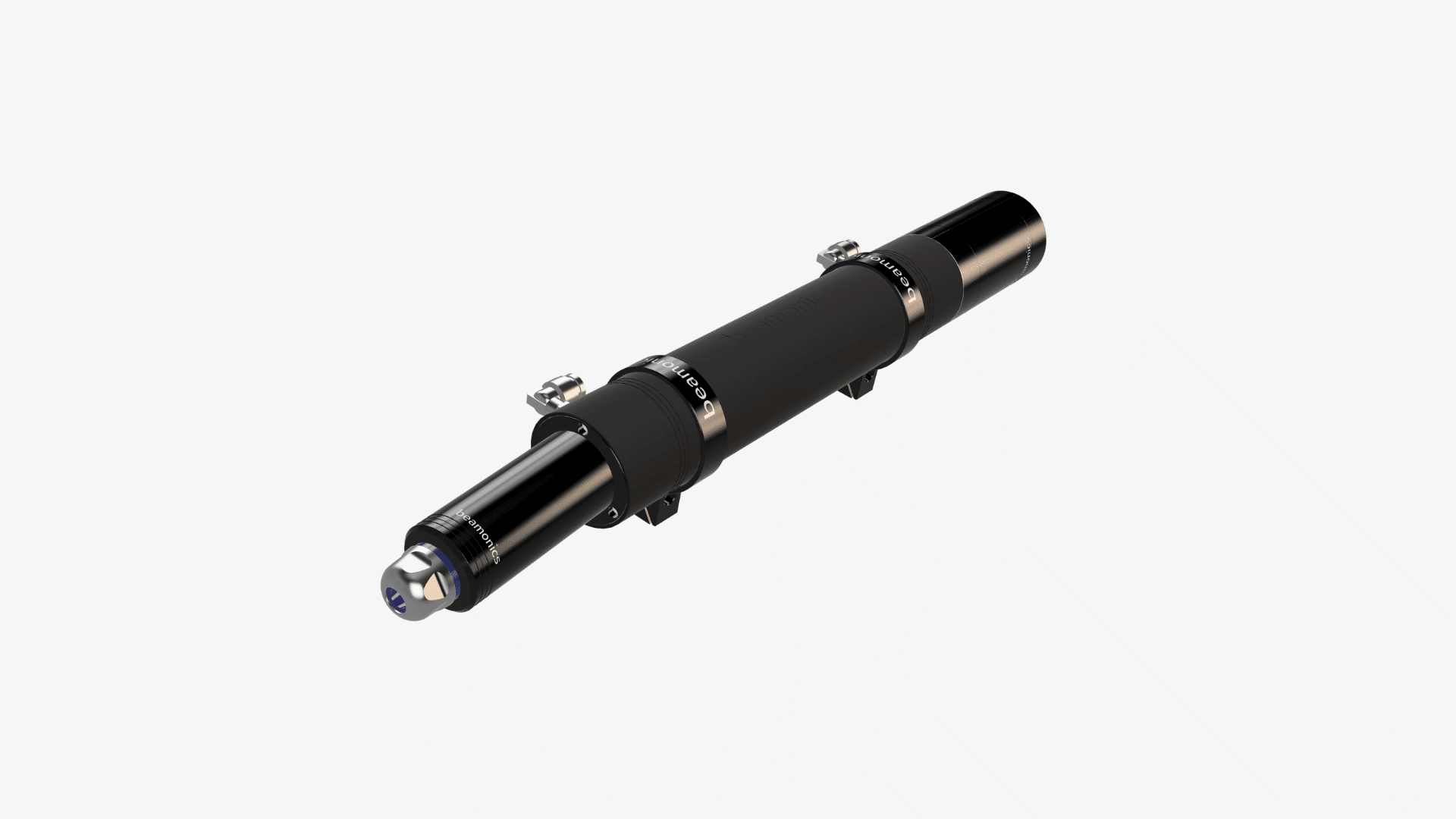
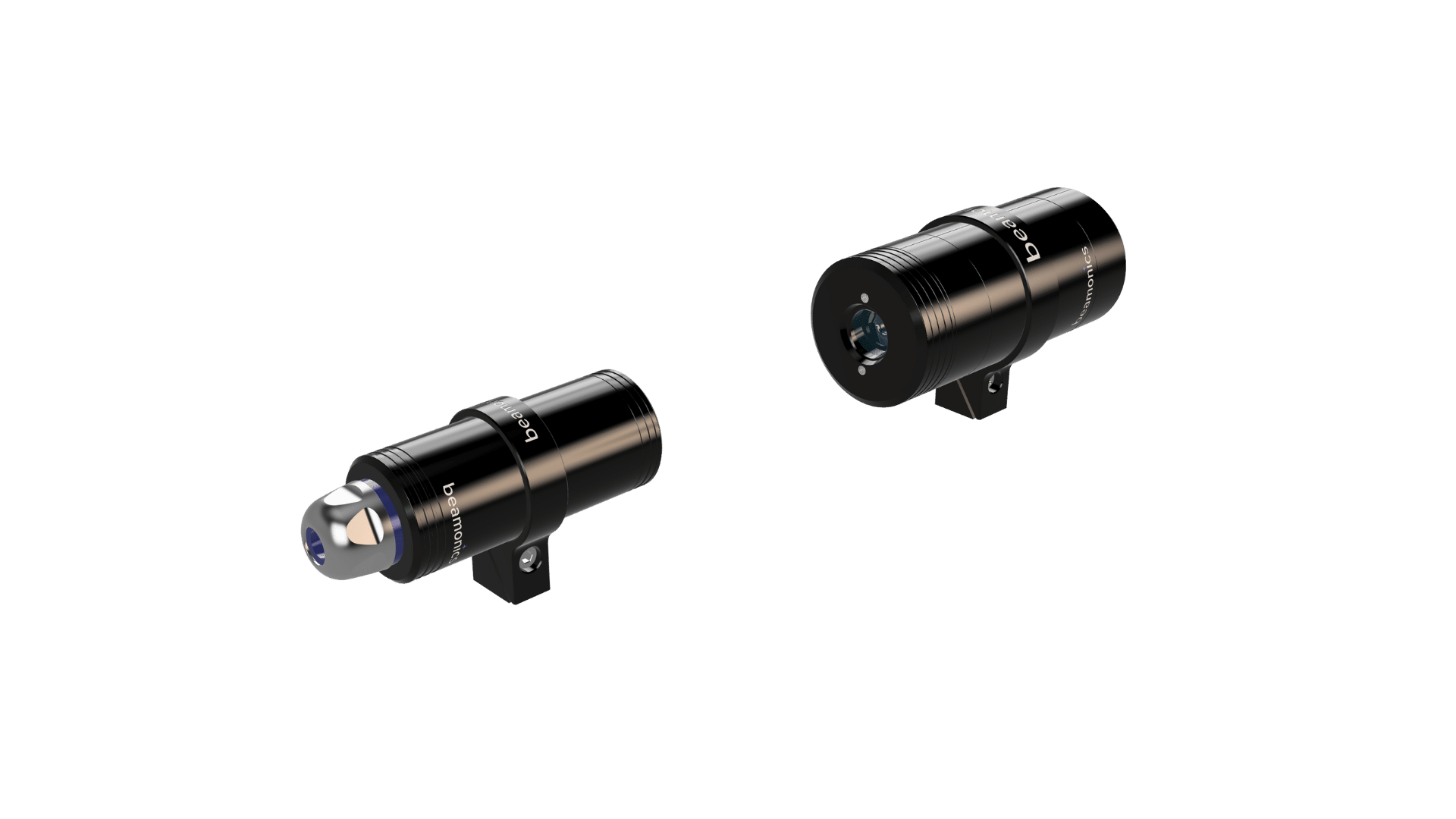
Installation labour is required for any analyzer technology. The BeamStack requires mounting a transmitter and receiver on opposite sides of a duct or process vessel, with alignment between the two. This is straightforward but does require mechanical preparation (flanges or mounting brackets) and electrical connection (power, data interfaces). The BeamCell requires plumbing for the sample gas path. The BeamSight, being a single-unit device weighing 0.7 to 1.0 kg, has the simplest installation requirements but still needs mounting, power, and data connectivity for fixed installations.
Integration with plant control systems (PLC, DCS, SCADA) requires engineering time regardless of the analyzer technology. The Beamonics instruments provide RS-485/422, 4-20 mA, relay outputs, and digital expansion interfaces, which are standard in industrial automation, but mapping these signals into the control logic and configuring alarm thresholds is site-specific work.
Operator training is needed to interpret the measurement data, understand the instrument’s diagnostic outputs, and perform the limited maintenance tasks (window cleaning, filter replacement in extractive configurations). The training requirement is modest compared to technologies that demand regular calibration procedures, but it is not zero.
Spare parts inventory is a practical consideration for any installed instrument. For the BeamStack and BeamCell, the most likely replacement items over a 10-year service life are optical windows and, in aggressive gas service, the BeamCell flow chamber. For the BeamSight, the battery in the portable configuration has a finite cycle life and will eventually need replacement. Laser diode modules, while long-lived, are not immortal and should be available as spares for critical measurement points.
Comparing lifecycle costs
A direct numerical comparison of TDLAS versus conventional analyzer TCO depends heavily on site-specific factors: the number of measurement points, the gases being measured, the calibration and maintenance regime mandated by site procedures or regulation, local labour rates, and the cost of process downtime if a measurement point goes offline.
The general pattern, however, is consistent across applications. The capital cost of a TDLAS analyzer is higher than a single electrochemical sensor or a basic zirconia probe. The operating cost over a 5 to 10 year period is lower, often substantially so, because the recurring costs of calibration gas, sensor replacements, and maintenance labour are reduced or eliminated. The crossover point, where cumulative TDLAS cost falls below cumulative conventional cost, depends on the specific comparison but typically occurs within the first two to four years of operation.
For extractive TDLAS (BeamCell) compared to a conventional extractive analyzer with full sample conditioning, the difference in sample-system maintenance alone can dominate the comparison. For in-situ TDLAS (BeamStack) compared to zirconia probes, the elimination of probe replacements and recalibrations is the primary driver. For remote TDLAS (BeamSight) in leak detection or area monitoring, the comparison is often against deploying multiple fixed-point electrochemical or catalytic sensors to cover the same area, where the aggregate sensor replacement and bump-test costs across many devices accumulate rapidly.
Practical considerations
The cost advantage of TDLAS is most pronounced in applications where conventional sensors have short service lives due to harsh conditions: high-temperature flue gases, corrosive species like HF or H₂S, high-humidity environments, or atmospheres containing catalyst poisons such as silicones or solvents. In these conditions, conventional sensor replacement intervals shorten and maintenance costs escalate, while the TDLAS measurement, being non-contact and non-consumptive, is unaffected.
In applications with benign conditions, low measurement-point counts, and an already-established maintenance routine, the cost case for TDLAS is less dramatic. Electrochemical sensors remain economical for low-density monitoring where quarterly maintenance is acceptable and where the measurement does not feed a critical control loop.
No TCO analysis should omit the cost of measurement uncertainty. An analyzer that drifts between calibrations introduces a systematic error that may not appear as a line item in a maintenance budget but manifests as suboptimal process control, excess fuel consumption, or emissions exceedances. Quantifying this cost requires process-specific modelling, but it is real and, in combustion control and emissions compliance applications, can exceed the direct maintenance savings.
Closing remark
The economic argument for TDLAS is not that the instrument is inexpensive. It is that the total cost of operating it over a decade is lower than the total cost of operating the technologies it replaces, because most of the recurring cost categories associated with conventional gas analysis do not apply. For facilities evaluating analyzer investments on a lifecycle basis rather than a capital-budget basis, this distinction determines which technology delivers the lower cost per reliable measurement year.
Related links
- BeamStack (BM-H-3) product page
- BeamCell (BM-H-3) product page
- BeamSight (BM-V-2) product page
- TDLAS vs. electrochemical cells and catalytic bead sensors
- TDLAS vs. paramagnetic oxygen analyzers